Does your floor fan wobble dangerously every time you turn it to high speed?
You might be using a fan with the wrong type of base support.
A stable fan is not just about comfort; it is a critical safety feature that prevents tipping, reduces noise, and ensures your equipment lasts longer.
The main difference between industrial and household fan bases is their weight and size capacity.
Industrial fan bases are heavy-duty, weighing between 3kg and 7kg to support large 18-30 inch fans.
Household fan bases are lightweight, ranging from 0.7kg to 2.5kg, designed for smaller 10-18 inch fans and easy portability.
Choosing the correct base is the secret to a quiet, safe, and efficient cooling experience.
Whether you are cooling a factory floor or a living room, understanding the specific engineering behind these bases will help you make the right choice.
Industrial Fan Bases: Built for Power
Industrial environments demand equipment that can withstand tough conditions and high-speed operation.
If you need a fan that stays planted on the ground, you need to look at industrial specifications.
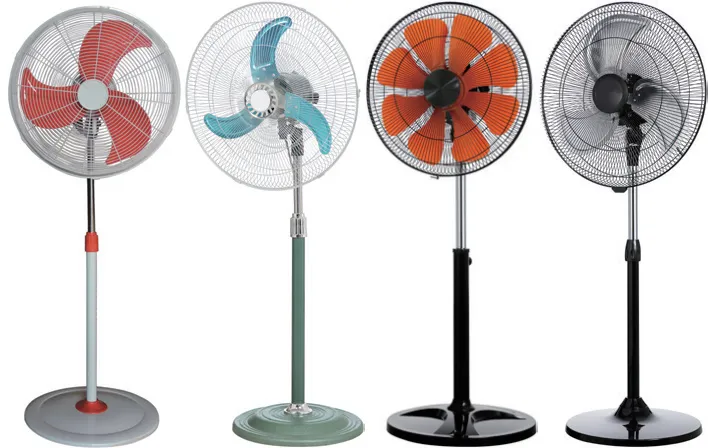
Industrial fan bases are engineered for stability, supporting fan sizes from 18 inches up to 30 inches.
These bases are significantly heavier, with weights ranging from 3kg up to 7kg, and typically come in round or cross shapes to anchor high-velocity machines.
The Engineering Behind Heavy-Duty Stability
When you look at industrial fans, the first thing you notice is their sheer size.
These fans are designed to move massive amounts of air, which creates a powerful “recoil” or vibration.
To counteract this, the base must be heavy.
According to manufacturing standards, industrial fan bases are designed for specific large-scale sizes, primarily 18-inch and 20-inch models, but extending up to 26-inch and 30-inch units.
The most critical specification for these bases is weight.
A lightweight base on a powerful industrial fan would cause the unit to “walk” across the floor or tip over.
Therefore, industrial bases start at a substantial 3kg.
The weight progression is distinct, offering options at 3kg, 3.5kg, and 4kg for standard industrial models.
For larger or more powerful units, the weight increases significantly to 5kg, 6kg, and even 7kg.
This weight is not accidental; it is a calculated counter-balance to the torque of the motor.
In terms of shape and design, industrial bases prioritize function over form.
You will generally find two main shapes: round and cross.
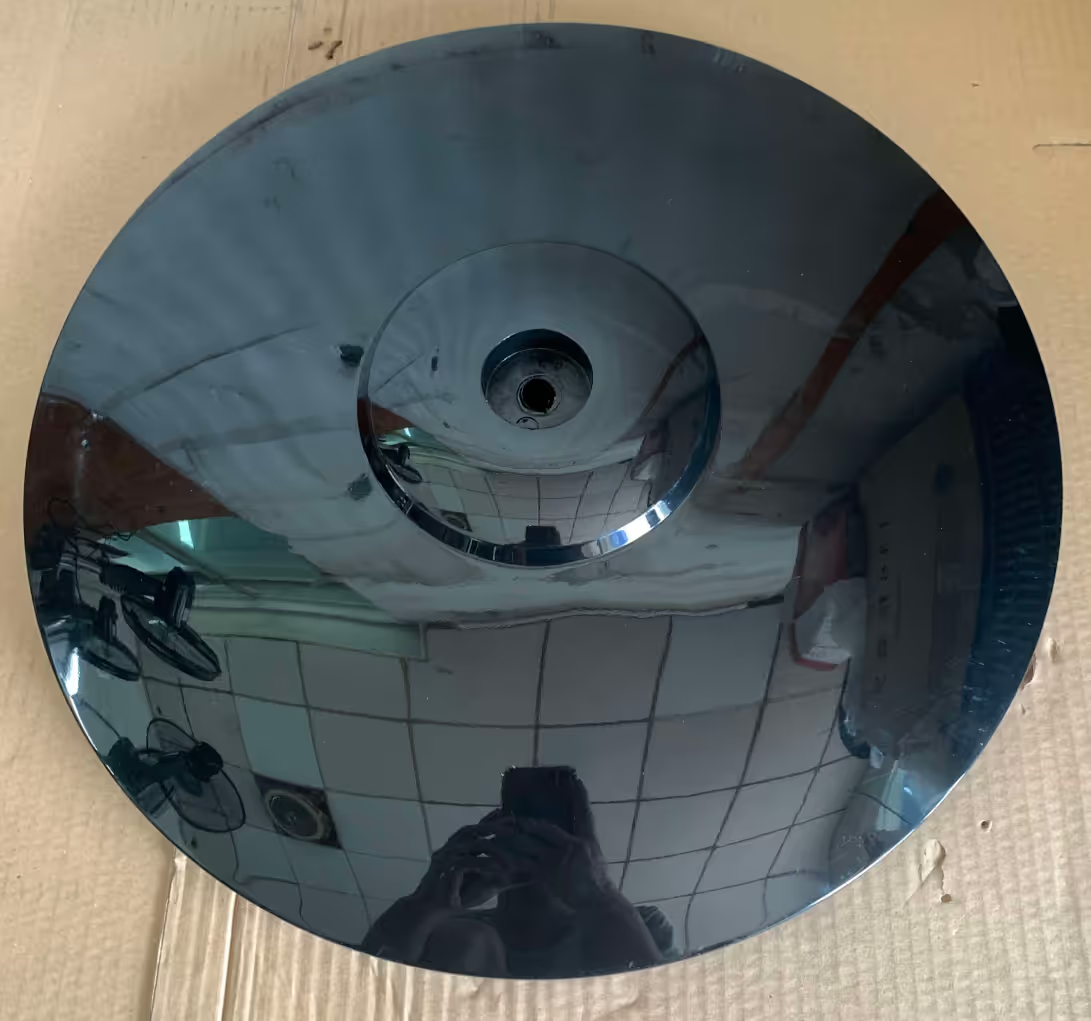
The round bases are robust, and their construction varies.
Some designs are very simple and do not require a base cover, with the surface directly painted to improve its appearance.
This “direct paint” approach on a weight block suggests a focus on durability and cost-effectiveness rather than aesthetic perfection.
The cross shape offers a wider footprint for stability without requiring a solid block of material.
By using these heavy, simple designs, industrial fans ensure safety in busy environments like warehouses and workshops.
Household Fan Bases: Designed for Flexibility
While industrial fans focus on raw stability, household fans are designed for the reality of daily life.
You need to move them from the living room to the bedroom, and they need to look good in your home.
Household fan bases prioritize portability and aesthetics, catering to fans under 18 inches.
They are much lighter, typically weighing between 0.7kg and 2.5kg, and feature diverse shapes like squares and circles with specific diameters between 370mm and 450mm.
Versatility and Design in Home Cooling
The household fan market is driven by the need for lighter, more adaptable cooling solutions.
These bases are designed for a wide range of smaller fan sizes, specifically those 18 inches and below.
Common sizes include 10-inch, 12-inch, 14-inch, 16-inch, and 18-inch models.
Because the blades are smaller and the motors are less powerful than their industrial counterparts, the bases do not need to be as heavy.
This difference allows for a much lighter weight profile.
Household bases start at an incredibly light 0.7kg.
The range includes many precise options to match the specific height and balance of the fan: 0.9kg, 1.2kg, 1.5kg, 1.7kg, 1.8kg, 2kg, and capping out at around 2.5kg.
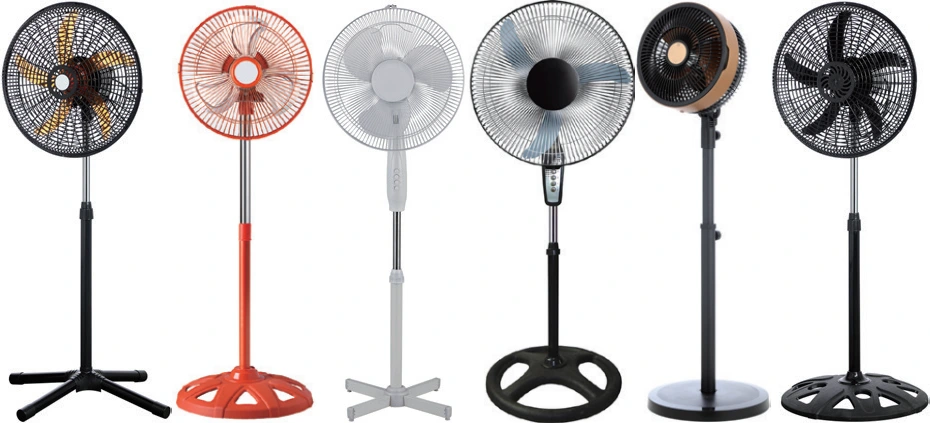
Generally, household fan bases are lighter than industrial fan bases.
This makes them easy for anyone to pick up and move.
Shape and size diversity is another hallmark of household bases.
Unlike the purely functional industrial designs, home bases come in both round and square shapes.
Manufacturers also pay close attention to the diameter of the base to ensure it fits in tighter residential spaces.
You will commonly find base diameters of 370mm, 400mm, 430mm, and 450mm.
Furthermore, the construction is more varied.
Some bases use a “cross leg” design that provides support with minimal material, while others feature various hole shapes for design flair.
This variety allows homeowners to choose a fan that blends into their interior decor while still providing adequate support.
Material Composition: Durability vs. Appearance
The material used in a fan base tells you a lot about its intended lifespan and environment.
It is not just about how heavy the base is, but what is inside that counts.
Industrial bases use rugged materials like all-iron or iron-wrapped plastic to withstand abuse.
In contrast, household bases often use lighter composites, with surface finishes ranging from simple raw materials to painted exteriors for better visual appeal.
Understanding What is Inside Your Fan Base
When selecting a fan, the material composition of the base is often overlooked, but it is the key to longevity.
In the industrial sector, the materials are chosen for toughness.
You will often find bases made of “all iron,” which provides maximum weight and resistance to impact.
However, there are also “all plastic” options for environments where corrosion might be an issue, or “iron sheet wrapping plastic blocks”.
This hybrid design—wrapping a heavy plastic block in an iron sheet—is a clever engineering solution.
It provides the bulk and stability of a solid block while protecting the core with a durable metal skin.
Surface treatment is also distinct.
Industrial bases may come as “ordinary material” (likely raw or basic finish) or as “painted bottom plates”.
The painting is often applied directly to the weight block, which seals the material and prevents rust, a crucial feature for fans used in humid or outdoor industrial settings.
On the household side, the focus shifts.
While the documents highlight the variety of weights and shapes, the material choices often align with the need for a cleaner look.
The “cross leg” support mentioned for household fans is typically a metal or plastic assembly that is far less dense than the solid industrial blocks.
The variety of “hole shapes” in household bases also implies the use of moldable materials like plastic or stamped metal, which allow for more intricate designs than solid iron casting.
Whether it is a sleek square base or a classic round one, the material choice in household fans balances sufficient weight for safety with the lightness required for portability.
Conclusion
The divide between industrial and household fan bases is clear.
Industrial bases are heavy (3kg-7kg), large, and built from iron or composites to anchor powerful 18-30 inch fans.
Household bases are light (0.7kg-2.5kg), stylish, and designed for portability with smaller 10-18 inch fans.
Choosing the right base ensures your fan operates safely, quietly, and effectively for years to come.
FAQ
1. Why does my pedestal fan wobble when I turn it on?
Wobbling usually happens when the base is too light for the motor’s power or if the floor is uneven.
Industrial fans use bases up to 7kg to prevent this exact issue.
2. Can I use an industrial fan base for my home fan?
Technically yes, but it might be overkill.
An industrial base is very heavy (3kg+) and might look out of place in a living room compared to a standard 400mm household base.
3. What is the difference between a round base and a cross base?
Round bases offer a solid, heavy footprint for maximum stability.
Cross bases (or cross legs) are lighter and often collapsible, making them easier to ship and move but slightly less stable.
4. How heavy should my fan base be?
It depends on the fan size.
For a small home fan (under 16 inches), 2kg is usually plenty.
For a large 30-inch industrial fan, you need at least 6-7kg to ensure safety.
5. Do plastic bases last as long as iron ones?
Plastic bases are rust-proof and great for humid homes.
Iron bases are stronger against physical impact but can rust if the paint chips, which is why many industrial bases come painted.
6. What are the standard sizes for fan bases?
Household fan bases typically have diameters of 370mm, 400mm, 430mm, or 450mm.
Industrial bases are often sized by weight rather than just diameter due to their heavy construction.