
Square-Frame Wall Exhaust Fans
A practical starting point for through-wall general ventilation. Confirm the blade diameter, frame dimensions, motor depth and fixing points against your installation opening.
ASK ABOUT WALL EXHAUST FANS

Source industrial exhaust fans for your distribution network, private-label range or ventilation project. SF Fan helps importers, distributors and brands confirm the wall opening, airflow requirement, motor, voltage, shutter, guard and export packing before bulk production.
OEM / ODM SUPPLYChoose the structure around the installation. Our industrial ventilation fan range starts with the opening, airflow duty and operating environment, then matches the components to the order.
A practical starting point for through-wall general ventilation. Confirm the blade diameter, frame dimensions, motor depth and fixing points against your installation opening.
ASK ABOUT WALL EXHAUST FANS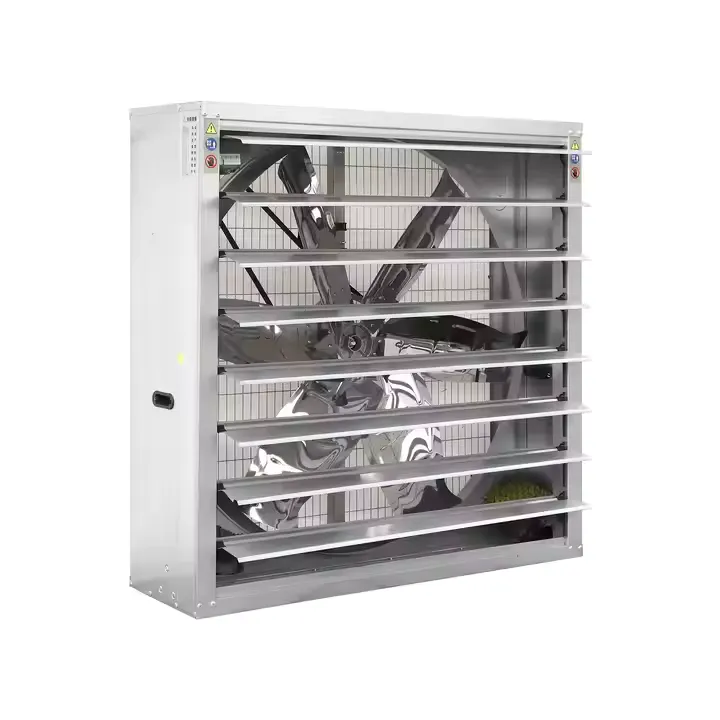
Discuss shutter or louver options to suit the opening and airflow direction. Confirm opening method, installation position and closed-position protection for the selected model.
DISCUSS SHUTTER OPTIONS
Define the protective grille, wire guard, access and clearance requirements around the motor and blade. Guard coverage should match the mounting position and destination market.
CHECK GUARD CONFIGURATIONS
Build a defined configuration for your brand or project. Review the motor, blade, frame, voltage, finish, rating label and packing around the approved specification.
START AN OEM CONFIGURATIONA heavy-duty industrial exhaust fan needs a complete specification. Large exhaust fans and high-CFM exhaust fans should be compared using measured performance and installation conditions, not diameter or power alone.
| Parameter | What to Confirm | Why It Matters |
|---|---|---|
| Blade & frame size | Blade diameter, overall frame width / height, depth and mounting points | Match the fan to the actual wall opening; blade size and frame size are different measurements. |
| Airflow & pressure | CFM or m³/h at the required static pressure, stated in Pa or in. w.g. | Compare airflow at the same duty point rather than a free-air figure alone. |
| Motor & supply | Voltage, frequency, phase, power in W or HP, and current in A | Check the available power supply and the motor configuration of the quoted model. |
| Speed & noise | RPM and noise level in dB(A), with test distance and operating conditions | Compare like-for-like measurements; higher speed alone does not establish suitability. |
| Operation & protection | Working hours, ambient conditions, shutter, guard and access | Define the expected duty and installation conditions before selecting a model. |
| Order requirements | Quantity, market, certification documents, logo and packaging | Prepare a usable wholesale quotation and an agreed production specification. |
Send an existing model, sample, drawing or target specification. Available sizes and airflow ratings are confirmed against the actual model data sheet.
A consistent bulk order starts with an agreed bill of materials. Confirm each component and its compatibility before the sample is approved.

Discuss winding material, motor specification, bearing arrangement and daily operating hours. Copper winding and ball-bearing options are evaluated by model.
Confirm blade material, diameter, profile, rotation and balance. An aluminum blade, cast blade or other construction must be matched to the motor and duty.
Confirm metal frame dimensions, mounting holes, housing depth and finish. Material and coating requirements follow the installation environment.
Review the opening method, orientation and closing arrangement. Gravity-closing shutters, fixed louvers and motorized dampers have different functions and requirements.
Specify the protective grille, wire guard, access and service clearance. Confirm what is included in the fan assembly and what is supplied separately.
Review voltage, frequency, single- or three-phase supply requirements, wiring, junction box, cord or plug and rating label for the exact model.
Tell us what needs to be removed and where the fan will discharge. The application helps define the airflow duty, construction and installation requirements.


Factory exhaust fans help remove warm, stale air from production areas. Confirm the heat source, working hours and available fresh-air intake.
Warehouse exhaust fans support air exchange in storage and loading areas. Share building dimensions, opening locations and your ventilation target.
A workshop exhaust fan or shop exhaust fan should match the actual activity. General ventilation and extraction at a contaminant source are separate requirements.
For a metal building exhaust fan, check the wall opening, support structure, framing and installation clearance before comparing sizes.
Commercial wall exhaust fans can support general ventilation. Confirm equipment heat loads, occupancy, noise needs and the available power supply.
Review humidity, dust, cleaning and corrosion exposure before selecting an agricultural exhaust fan configuration. Site conditions determine the required materials and protection.
Explore our factory, workshop and warehouse applications or compare the broader industrial fan range for air-circulation requirements.
An industrial extractor fan must work with the building. The air path, replacement air and resistance affect how much air is actually exhausted.
Room length, width and height establish the volume. The air-change target depends on the activity, heat or moisture source and applicable project requirements.
Airflow (m³/h) = room volume (m³) × air changes per hour.
For CFM, use room volume in cubic feet × air changes per hour ÷ 60. The air-change target must be selected for the actual application.
Provide a suitable fresh-air intake or make-up air path. A restricted intake can reduce exhaust airflow even when a larger fan is installed.
Shutters, guards, grilles, dampers, duct length and elbows add system resistance. Compare the fan's airflow at the required static pressure and confirm whether an axial, direct-drive configuration suits the installation.
Send the intake and exhaust positions, opening dimensions and any duct route. A short, open wall discharge and a long ducted system require different selection checks.
We can help review a suitable product configuration. Final ventilation-system sizing and installation should be confirmed by your qualified project engineer.
Similar search terms can describe different products. Confirm the installation and air-removal duty before comparing an industrial air extractor with other ventilation equipment.
| Comparison | Selection Difference | Next Step |
|---|---|---|
| Industrial wall fan vs exhaust fan | A wall fan circulates air within a space. An exhaust fan discharges air through an opening to support air exchange. | Compare industrial wall fans when room-air circulation is the priority. |
| Wall exhaust fan vs roof exhaust fan | Mounting position changes the housing, weather protection, fixing and maintenance requirements. | Send roof details for a separate product review; a wall model is not automatically roof-compatible. |
| Wall-mounted vs duct / inline fan | Duct length, bends and fittings create resistance that an open wall installation may not have. | Specify the full duct route and duty point before matching an industrial duct fan. |
| Axial fan vs centrifugal blower | Fan type and performance curve must suit the airflow and pressure requirement. | Discuss the system resistance before choosing an industrial exhaust blower or centrifugal configuration. |
| Industrial vs household exhaust fan | Installation, operating environment, product construction and procurement specifications differ. | Explore bathroom, kitchen and household exhaust fans for those product lines. |
A high-temperature exhaust fan, corrosion-resistant exhaust fan, grease exhaust fan or industrial fume extraction system requires a specific technical review. Share the temperature, contaminant, exposure, operating hours and required documents. Commercial kitchen hood extraction, construction-site extraction and process exhaust must be evaluated separately from general building ventilation.
For outdoor or exposed exterior-wall installation, confirm rain protection, motor enclosure, material finish and the permitted mounting orientation.

Work with an industrial exhaust fan manufacturer around a defined product brief. Choose an existing configuration or discuss an OEM / ODM development scope, then approve the sample and specification before production.
For private-label industrial exhaust fans, send your logo, artwork and market requirements. Explore our OEM / ODM electric fan programs and certification and market compliance support.
START YOUR OEM EXHAUST FAN PROJECTThe approved model, sample and bill of materials define what is produced. Performance figures should state the model and relevant test conditions so you can compare repeat orders consistently.

Motor, blade, frame, guard and electrical components are checked against the approved order specification.

Confirm applicable electrical safety, current, rotation, vibration, noise and appearance checks for the selected model.

Check the agreed configuration, labels, accessories, packing protection and carton information before loading.
Review our production process, incoming quality control and fan testing and quality control procedures.
Packing must protect the fan while fitting your distribution and assembly plan. Confirm the structure and carton data before comparing freight cost per unit.

| Packing Item | What We Confirm |
|---|---|
| Assembled / CBU | Confirm the final assembly state, product protection and carton dimensions. |
| SKD / CKD evaluation | Review whether component packing suits this exhaust fan structure and your local assembly capability. |
| Part protection | Protect blades, shafts, frames, guards and shutters against movement and impact. |
| Carton & marks | Confirm artwork, gross / net weight, carton CBM and shipping identification. |
| Container loading | Calculate the loading plan from approved cartons for your order; no universal quantity applies. |
| Spare parts | Agree on the spare-parts list, quantities and packing identification before shipment. |
Read more about fan packaging and container loading and SKD / CKD fan solutions. Component supply is evaluated for the specific exhaust fan model.
A useful industrial exhaust fan factory price includes a clear configuration and order scope. Send your requirements so we can prepare a model-specific quotation for bulk supply.
Share the model or photo, market, installation opening, airflow target, power supply and quantity.
Review motor, blade, frame, shutter, guard, finish and required documents.
Confirm the sample, branding, rating label, instructions and packaging files.
Schedule bulk manufacturing after specifications, commercial terms and approvals are complete.
Review product checks, packing, accessories and the agreed spare-parts arrangement.
Finalize the loading plan, shipping marks and export documents for the shipment.
Our standard MOQ is 1,000 pieces per model. Custom components, finishes and packaging may affect the final minimum quantity.
Sample timing and production lead time are confirmed with the quotation. The standard warranty is one year. We generally provide 0.5% spare parts, matched to the model and agreed order terms.
Have a mixed product plan? Send your model list and visit our industrial fan range.
Answers to common model-selection, OEM and wholesale purchasing questions. Visit our full FAQ page for general order terms.
Our standard MOQ is 1,000 pieces per model. The exact minimum depends on the selected structure, motor, finish, branding and packing requirements. Send your market and quantity for confirmation.
Start with the building dimensions, application, intake and exhaust positions, opening size, power supply and operating hours. Share an airflow target if available. Final system sizing should be confirmed by your qualified ventilation engineer.
Airflow depends on room volume, the required air-change rate and any heat or contaminant load. For an air-change estimate, CFM equals room volume in cubic feet multiplied by air changes per hour, divided by 60. The target rate and actual static pressure must match the application.
The fan must overcome resistance from its air path. Shutters, guards, grilles, ducts and bends can reduce delivered airflow. Compare performance at the required static pressure rather than relying only on a free-air airflow number.
Yes, we evaluate compatible motor, blade, frame, voltage, frequency, shutter, guard, finish, logo, label and carton options by model and order quantity. Confirm the complete specification before sample approval and bulk production.
A conventional industrial wall fan moves air within a room for circulation. An exhaust fan discharges air through an opening to support air exchange. See our industrial wall fan page for circulation products.
These applications require a separately confirmed suitable model and technical review. Share the temperature, medium, exposure, duty and documentation requirements. A standard general-ventilation fan should not be selected for those conditions by assumption.
Send the exact product type, installation and duty point for review. Roof-mounted, inline, ducted and centrifugal equipment are separate configurations. This page focuses on industrial wall and square-frame exhaust fan sourcing.
We support OEM / ODM and private-label projects, including agreed branding, labels and packaging. Assembled, SKD or CKD options are evaluated according to the exhaust fan structure and your assembly capability.
Send the reference model, opening dimensions, airflow and static-pressure target if known, environment, voltage, frequency, phase, quantity, destination market and packing requirements. Include required documents and your preferred delivery date.
The standard warranty is one year under the agreed order terms. We generally provide 0.5% spare parts and troubleshooting guidance. A covered manufacturing issue that cannot be resolved with supplied parts can be reviewed for motor replacement under those terms.
Send your product reference, quantity, destination market and installation requirements. We will review a suitable configuration, OEM scope and export packing plan for your order.
Email: [email protected]
 Optimized by Seraphinite Accelerator