Buying fans without checking the guard details is a risky move.
If you choose the wrong type or size, you might end up with safety issues or pay too much.
Don’t let suppliers trick you with poor quality.
Fan guards, also known as fan grills, generally come in three shapes: radial, spiral, and fishnet.
They vary by diameter to fit specific fan sizes and differ in wire thickness.
Choosing the right combination is crucial for passing safety tests and ensuring the product is durable.
Let’s look at the specific details of shapes, sizes, and wires so you can negotiate with confidence.
Fan Guard Shapes and Sizes
Not all guards fit every fan.
Using the wrong shape increases your costs or causes your product to fail safety inspections.
You need to know exactly which type matches your market needs.
Radial guards are the most common and versatile choice.
Spiral guards offer extra strength for industrial use, while fishnet (diamond) guards are perfect for household safety.
We match these shapes to specific fan sizes, ranging from small 9-inch models to massive 30-inch industrial units.
When you talk to manufacturers, you will see three main designs.
Understanding the pros and cons of each will help you make the right decision.
Radial Guards (The Standard Choice)
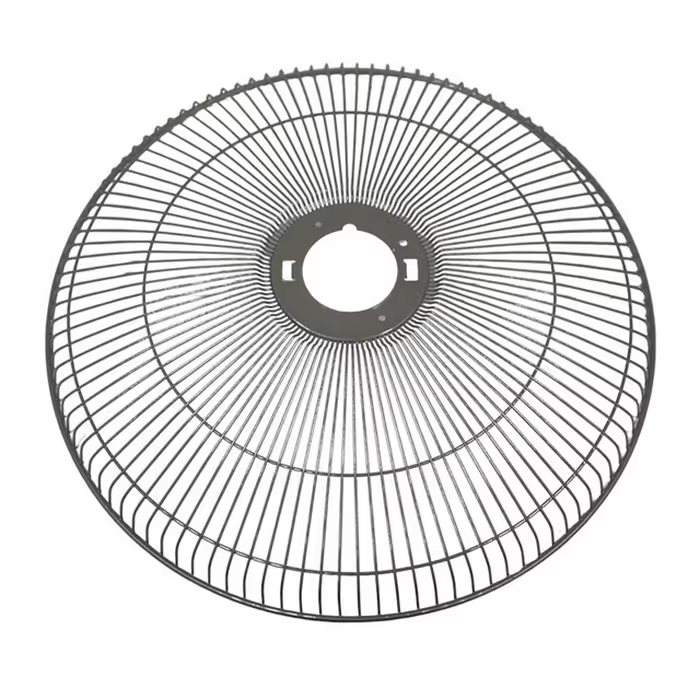
This is the “Radiation” style.
It is the most ordinary fan guard you will see.
The manufacturing cost is low, and it fits almost any type of fan.
If you want a general-purpose solution, this is it.
Here is a quick reference for Radial guard sizes:
- 9 inch: 270mm
- 12 inch: 340mm, 355mm
- 14 inch: 410mm
- 16 inch: 430mm, 445mm
- 18 inch: 500mm
- 20 inch: 560mm
- 26 inch: 688mm, 710mm
- 30 inch: 810mm
Spiral Guards (For Heavy Duty)
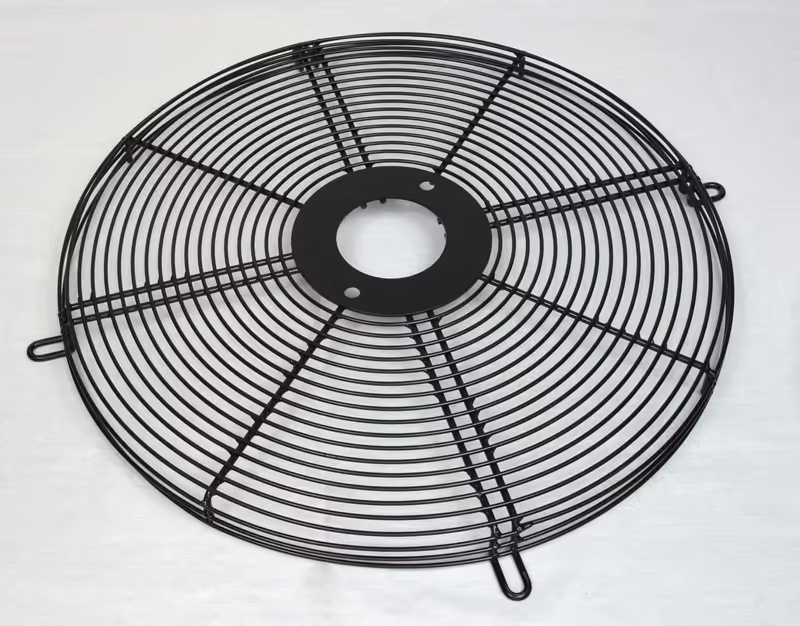
We usually use spiral nets for industrial fans or very large fans.
These are much stronger than radial guards.
However, they are more expensive.
If you are selling to a factory or a garage setting, you need this strength.
Common sizes for Spiral guards include:
- 18 inch: 500mm
- 20 inch: 560mm
- 26 inch: 688mm, 710mm
- 30 inch: 810mm
Fishnet or Diamond Guards (For Home Safety)
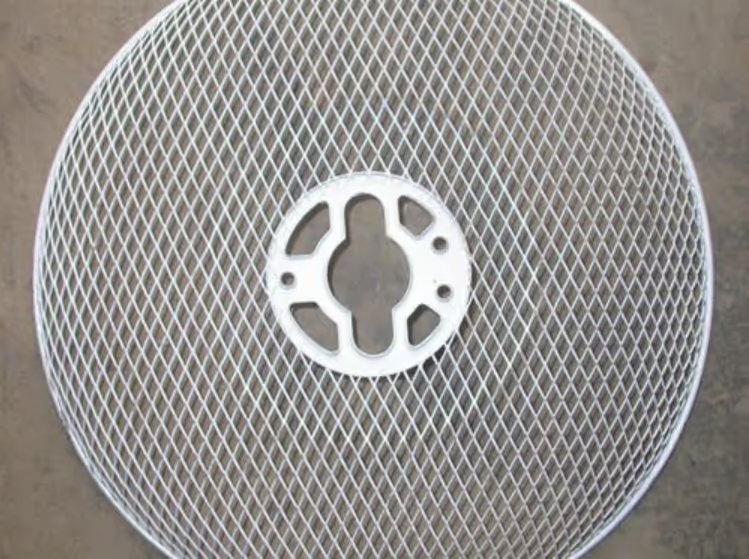
You typically see these on home fans.
They are mostly used for 9-inch, 12-inch, and 16-inch sizes.
You might ask: Why use Fishnet if Radial is cheaper?
The answer is Safety Certification.
If a Radial guard needs to pass a strict “finger test” (to keep kids’ fingers out), the wires must be very thick and close together.
This becomes very heavy and expensive.
The Fishnet design solves this.
It passes safety tests easily without needing extra heavy wires.
It meets market needs better for home use.
Standard Fishnet Sizes:
| Fan Size (Inch) | Guard Diameter (mm) |
| 12 inch | 340mm |
| 16 inch | 410mm/430mm |
Wire Diameter Matters
The shape is right, but is it strong enough?
Thin wires bend easily and can hit the fan blades.
Thick wires cost too much money.
You must find the perfect balance.
Wire diameter determines the guard’s hardness and safety.
Indoor fans typically use 1.0mm to 1.5mm wires, while industrial fans require thicker 1.4mm to 2.0mm wires to prevent deformation.
Always clarify if the measurement includes the paint coating, which adds about 0.1mm.
The thickness of the wire is just as important as the shape.
This “gauge” decides how hard or soft the guard is.
When you are negotiating, this is a key detail where suppliers might cut corners.
Painting vs. Bare Wire
First, you must be clear on how you measure.
- With Paint: The wire is thicker.
- Without Paint: The wire is thinner.
Usually, the paint adds 0.1mm to the total thickness.
If you order a 1.2mm wire, make sure the supplier knows if that is before or after painting.
Indoor Fan Guidelines
For standard home fans, we look at wires between 1.0mm and 1.5mm.
- Economy Choice: 1.0mm, 1.1mm, 1.2mm. These are common because the price is reasonable.
- Certified Choice: 1.4mm, 1.5mm. If you need to pass strict quality certifications, you must use these thicker wires. The guard needs this hardness to pass impact tests.
Industrial Fan Guidelines
Industrial fans are heavy and powerful.
If the wire is too thin, the wind pressure can push the guard into the blades.
This is dangerous.
Common Industrial Sizes:
- 1.4mm
- 1.6mm
- 1.8mm
- 2.0mm
Pro Tip: The larger the fan, the thicker the wire must be.
For very large sizes, we also add extra support bars (ribs) to keep the structure stable.
Surface Treatment Options
A rusty fan looks terrible and sells poorly.
The wrong finish ruins your product’s lifespan.
Do you choose paint or plating?
Fan guards usually use powder coating (paint) or electroplating.
Painting creates a thicker layer but can scratch during transport.
Electroplating looks shiny and premium but is prone to rusting in humid environments, making it less suitable for long-term storage.
The final step is how the guard looks and handles the environment.
There are two main paths here.
1. Spray Paint (Powder Coating)
This is very common.
The paint layer makes the wire relatively thick.
- Pros: protects the metal well.
- Cons: It scratches easily.
What to watch for:
If the factory is careless during transport or packaging, you will see scratches.
You might also see “floating spots” (lumps of paint) or rough edges (burrs).
These are signs of bad quality control.
2. Electroplating (Chrome look)
This gives the fan a shiny, metallic finish.
It looks very nice and expensive.
- Pros: Good aesthetics.
- Cons: Rust.
In humid weather, electroplated guards rust very easily.
You cannot store them in a warehouse for a long time without climate control.
If your market is in a tropical area, this might be a risk.
Conclusion
Understanding guard shapes, sizes, and wire specs prevents bad purchases.
Use this guide to check product details, negotiate better deals, and ensure your fans are safe and high-quality for your customers.