
Industrial fan performance issues often confuse buyers.
If you choose the wrong industrial fan blade, you lose money and airflow.
Here is how to pick the right industrial fan blade.
The industrial fan blade is the most critical component after the motor.
Its performance depends on five key factors: size, shape, angle, weight, and material.
Understanding these elements ensures you select a fan that delivers optimal airflow and energy efficiency for your specific needs.
Let’s break down these factors so you can make the best choice for your cooling system.
Fan Blade Sizes
When people talk about fan size, they actually mean the fan blade diameter.
Common industrial sizes range from 20 inches (500mm) to 30 inches (750mm).
Matching the blade size to your space is the first step in fan selection.
When we discuss the “size” of a fan, we are almost always referring to the diameter of the blade sweep.
This is the total distance from one tip of the blade to the opposite tip.
Understanding these measurements is vital because if you buy a replacement blade that is even slightly too big, it will hit the protective guard.
If it is too small, it will not move enough air.
In the industrial sector, we use a standard set of sizes.
We often see these listed in inches, but for manufacturing and precise fitting, we also use millimeters.
Common Industrial Sizes
Here is a quick reference table to help you convert between the two common standards used in the industry:
| Size in Inches | Size in Millimeters |
| 20 inches | 500 mm |
| 24 inches | 600 mm |
| 26 inches | 650 mm |
| 30 inches | 750 mm |
Why Size Matters
The size of the blade dictates the area of coverage.
A 30-inch fan is not just “bigger” than an 20-inch fan; it pushes a much larger column of air.
However, you cannot simply put a 30-inch blade on any motor.
Larger blades require more physical space and usually a different motor configuration to handle the increased resistance.
When selecting a blade, you must measure your current setup carefully.
Check the safety cage or housing diameter and ensure the blade you choose corresponds exactly to the standard dimensions listed above.
Fan Blade Shapes and Count
Does the number of blades really change anything?
Many think more is better, but that is not always true for industrial fans.
Fan blades come in various shapes and counts, typically ranging from 2 to 7 blades.
However, industrial fans usually use 2, 3, or 4 blades.
The shape and number of blades directly influence the noise level and the volume of air moved.
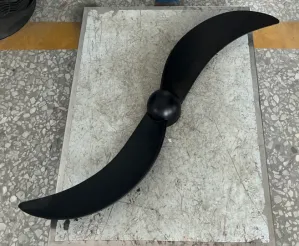
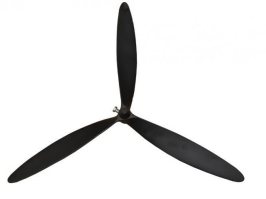
The shape and number of blades on a fan are not just design choices; they are engineering decisions that change how the fan works.
You might see fans with anywhere from 2 to 7 blades.
In the consumer market, like a quiet fan for a bedroom, you often see 5 or more blades.
This is because more blades can often be quieter and provide a gentle breeze.
The Industrial Standard
However, in the industrial world, the priorities are different.
We need raw power and high air volume.
That is why you will mostly see industrial fans with:
- 2 Blades
- 3 Blades (Very Common)
- 4 Blades
Fewer Blades vs. More Blades
Why do industrial fans use fewer blades?
It comes down to drag and speed.
A fan with fewer blades puts less drag on the motor.
This allows the motor to spin faster.
When you have high speed combined with fewer blades, you get a very strong, focused airflow.
If you add more blades, the drag increases.
The motor might have to work harder, or it might spin slower.
While this might make the fan quieter, it might not push the air as far as a 2 or 3-blade industrial fan.
When you are looking at industrial fans, do not assume that a 7-blade fan is “better” than a 3-blade fan.
If your goal is moving a lot of air across a large warehouse, the standard 3-blade industrial shape is often the most efficient choice.
The Blade Angle
Why do some fans blow harder than others?
The secret often lies in the twist of the blade, not just the motor speed.
Blade angle, or pitch, usually sits between 10 and 18 degrees.
A steeper angle grabs more air, increasing wind power.
However, this requires a stronger motor to handle the extra drag without burning out.
The “angle” of the fan blade is also called the pitch.
Imagine you are putting your hand out of a moving car window.
If your hand is flat, the air slips past easily.
If you tilt your hand up, you feel a strong force pushing back.
This is exactly how fan blade angles work.
Common Angles
In industrial fans, the manufacturers do not just pick a random angle.
They usually stick to specific degrees to ensure consistency.
The most common angles you will find are:
- 10 degrees
- 12 degrees
- 14 degrees
- 16 degrees
- 18 degrees
The Motor Relationship
You cannot talk about the angle without talking about the motor.
This is a critical balance.
- High Angle (e.g., 18 degrees): The blade “bites” into the air aggressively. This blows a lot of air. However, it is heavy work. The motor must be strong enough to push against that resistance. If you put a high-angle blade on a weak motor, the motor will overheat and fail.
- Low Angle (e.g., 10 degrees): The blade slices through the air easily. It uses less power. However, it moves less air.
The Rule of Thumb
If the speed (RPM) of the fan stays the same:
- Greater Angle = Higher Power Consumption + Stronger Wind
- Smaller Angle = Lower Power Consumption + Weaker Wind
This means you must ensure your motor is “tuned” or rated for the specific angle of the blade you are using.
You cannot simply swap a 10-degree blade for an 18-degree blade and expect everything to work perfectly without checking the motor specs.
Fan Blade Weight
Does a heavier blade mean better quality?
Weight plays a tricky role in how your fan performs and how much energy it uses.
Generally, a heavier fan blade increases the load on the motor, which results in higher power consumption and stronger wind.
Conversely, lighter blades use less power but may move less air unless the pitch is adjusted.
Weight acts very similarly to the angle of the blade.
It represents a “load” that the motor has to carry.
When we design or choose fans, we have to think about the physical mass of the aluminum being spun around thousands of times a minute.
The Impact of Weight
- Heavier Blades: A heavy blade carries more momentum. To get it moving and keep it moving against air resistance requires more energy (watts). This generally translates to a higher power output from the fan, which often results in greater wind force.
- Lighter Blades: These are easier for the motor to spin. They draw less electricity. However, because they lack mass, they might not push the air as forcefully if all other factors are equal.
Balancing Weight and Angle
Here is where things get interesting.
You can actually manipulate the results by combining weight and angle.
It is possible to achieve the same wind force with different combinations.
For example:
- Option A: A heavy blade with a standard angle.
- Option B: A lighter blade with a steeper (larger) angle.
In Option B, the lighter weight saves power, but the steeper angle adds the load back on to generate the wind.
Manufacturers play with these variables to find the “sweet spot” where the fan moves the most air for the least amount of electricity.
When buying a spare part, try to match the weight of your old blade to avoid unbalancing your motor.
Material Choices: Aluminum and Alloys
Metal blades look similar, but the material changes everything.
Choosing between manufacturing processes affects cost, stability, and longevity.
Industrial fan blades are typically made from Die-Cast Aluminum, Stamped Aluminum, or Magnesium Aluminum alloy.
While Die-Cast and Stamped options offer stability, Magnesium Aluminum is lighter and cheaper but suffers from significant balancing and vibration issues.
When selecting a fan blade, the material is just as important as the size.
Most industrial blades are metal, but “metal” can mean very different things.
There are three main contenders: Die-Cast Aluminum, Stamped Aluminum, and Magnesium Aluminum.
Die-Cast Aluminum
Die-casting involves melting the aluminum and pouring it into a mold.
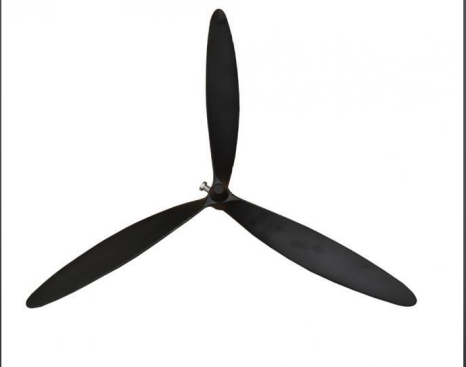
- Pros: Very solid and sturdy. They have a smooth finish and consistent shape.
- Cons: They can be heavier than other types.
Stamped Aluminum
Stamping involves punching the shape out of a flat metal sheet.
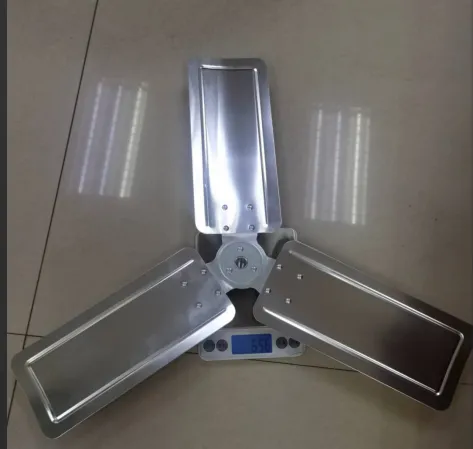
- Pros: Good balance of weight and strength. Uniform thickness.
- Cons: Slightly less rigid than die-cast.
Magnesium Aluminum (Mg-Al)
This is a budget-friendly alternative that mixes magnesium with aluminum.
- Pros: It is the lightest option available, and it is also the cheapest. If you need to save money and reduce the weight on the motor, this looks like a good choice.
- Cons: The biggest downside is stability. This material is notoriously difficult to balance. Even after a technician adjusts it, it tends to wobble or jitter. This vibration can create noise and eventually damage the fan motor.
Comparison Summary
| Feature | Die-Cast Aluminum | Stamped Aluminum | Magnesium Aluminum |
| Process | Molded | Punched Sheet | Mixed Alloy |
| Price | Moderate | Moderate | Cheapest |
| Weight | Heavy | Medium | Lightest |
| Stability | Excellent | Good | Poor (Prone to shaking) |
When choosing, ask yourself if saving a little money upfront is worth the risk of a shaky, noisy fan later.
For long-term reliability, pure aluminum options are usually safer, but Mg-Al exists for strict budget requirements.
Conclusion
Understanding the dimensions, blade count, pitch, weight, and material helps you select the best industrial fan.
Getting these five factors right guarantees better airflow and equipment longevity.