Worried about electrical fires or safety hazards in your home or business?
You are not alone, as poor quality electronics cause serious risks and accidents every day.
VDE (Verband der Elektrotechnik, Elektronik und Informationstechnik e.V.) is a globally recognized German certification body.
It specializes in testing and certifying electrical products to ensure they meet high safety, quality, and performance standards.
If you buy, sell, or manufacture electronics, understanding this mark is crucial.
It is not just a logo; it is a shield against low-quality goods.
Let’s explore why this German standard is the global benchmark for safety and how it protects your business.
Products that need VDE certification.
VDE certification is typically necessary for products containing electrical or electronic components.
This includes consumer electronics like refrigerators, industrial equipment like motors, and renewable energy equipment such as solar panels.
When we look at the market today, we see a wide range of goods.
But not all of them are built the same.
The VDE mark is a clear separator between high-end goods and cheap substitutes.
The Critical Role of Components
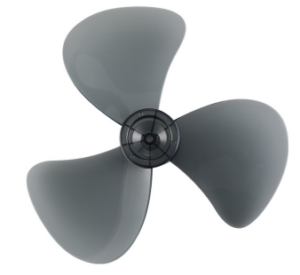
It is easy to look at a finished product, like an electric fan or a washing machine, and assume it is safe.
However, a product is only as safe as its smallest part.
This is where VDE certification shines.
It does not just look at the outside; it looks at the internal organs of the machine.
As a manufacturer, I have seen many buyers ignore the internal specs.
They look at the price and the design.
But you must look deeper.
Especially for appliances like electric fans, to avoid risks from low quality, all the following key parts must be VDE certified:
- Capacitors and Fuses: These control energy flow and prevent overloads.
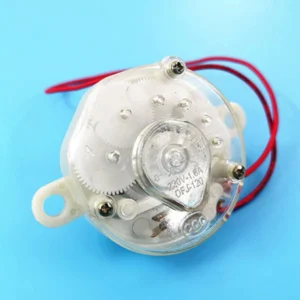
- Switches and Timers: These are high-wear moving parts subject to frequent use.
- Wire Connectors and Internal Wires: Connections hidden inside the casing must be absolutely reliable.
- Plugs and Wires: These bring high voltage directly into the device, making insulation vital.
If you are sourcing products, you must ask if these specific parts are all VDE certified.
As an electric fan manufacturer (like us, SF Fan), I strongly suggest you choose suppliers who use VDE certified parts.
Using VDE-certified components avoids low-quality traps.
It ensures the device won’t overheat or short-circuit after a few months of use.
Key Industries Relying on VDE
The scope of VDE is massive.
It covers almost everything that runs on power.
Here is a breakdown of where you will see it most often:
| Industry | Common Examples | Why it Matters |
| Consumer Electronics | TVs, Washing Machines | These run in our homes 24/7. Safety is non-negotiable here. |
| Industrial Equipment | Control panels, Motors | Downtime costs money. VDE ensures these machines keep running. |
| IT Devices | Routers, Computers | These handle our data and stay plugged in constantly. |
| Lighting | LED Luminaires | Poor lighting components are a leading cause of house fires. |
| Medical Devices | Patient Monitors | Reliability here is literally a matter of life and death. |
Global Acceptance and Market Access
Why do we care so much about a German standard?
Because it is accepted globally.
If you want to sell in Europe, Asia, or South America, this mark opens doors.
Many countries require VDE certification for specific electrical products.
This makes compliance essential for importers.
It acts as a passport for your goods.
It tells the customs officer and the final customer that this product is safe.
VDE certification process
Does the certification process seem too complicated or expensive to handle?
Many manufacturers struggle to understand the exact steps required to get this prestigious mark.
Obtaining VDE certification is meticulous and comprises several stages, starting with an application and document review.
It includes rigorous sample testing and factory inspections to ensure consistent adherence to approved designs.
The word “meticulous” is perfect for describing this process.
It is not a rubber stamp.
You cannot just pay a fee and get the certificate.
You have to earn it.
This rigor is what gives the VDE mark its value.
The Documentation and Review Phase
The journey begins with paperwork.
Manufacturers must submit detailed technical documentation.
This is not just a manual.
It includes circuit diagrams, lists of materials, and safety specs.
VDE experts review these to ensure they comply with safety standards.
Think of this as the blueprint check.
Before they even look at the physical product, they want to know if the design makes sense on paper.
If you use the wrong wire gauge in your drawing, you fail right here.
This saves time.
It catches design flaws early before you build expensive prototypes.
Sample Testing and Factory Inspections
Once the paper is approved, the real work starts.
VDE asks for a product sample.
This sample undergoes comprehensive testing.
They check electrical safety, mechanical strength, and how it handles the environment.
But here is the critical part: Factory Inspection.
Some certifications only test the sample you send them.
This allows dishonest factories to send a “Golden Sample”—a perfect unit made just for the test—while shipping junk to customers.
VDE prevents this.
They conduct on-site inspections.
They visit the factory.
They check the production line.
They verify that the fan or tool being made on Tuesday is identical to the one they tested on Monday.
Long-Term Surveillance
It does not end when you get the certificate.
VDE performs regular surveillance.
They do periodic audits and tests to ensure ongoing compliance.
- Why is this good? It keeps the factory honest.
- What happens if they fail? They lose the mark.
This cycle of testing, inspecting, and auditing is why we trust VDE.
It is a continuous relationship, not a one-time transaction.
For a buyer, this means the quality you bought today will likely be the quality you get next year.
Testing process
How do we know these tools are actually safe to use in the real world?
You need to know if the tool can actually handle dangerous high voltage without killing you.
Insulated tools undergo a series of tests, including the VDE voltage piece test where they are submerged in water.
They are also subjected to cold shock and adhesion tests to guarantee safety up to 1000 VAC.
Let’s dig into the physics of these tests.
They are designed to simulate the worst possible conditions.
A tool might look fine on a shelf, but will it save your life in a freezing winter storm or a hot factory?
The Voltage Piece Test
This is the most famous test.
They take the tool and submerge it in water for 24 hours.
Why water?
Because water conducts electricity perfectly.
It soaks into any tiny crack or pore in the insulation.
After the bath, they apply 10,000 Volts (10 kV AC) for three minutes.
- The tool is rated for 1,000 Volts.
- They test it at 10,000 Volts.
This is a 10x safety margin.
The tool passes only if there is no spark.
If it holds 10,000V, you can be very confident it will handle the 1,000V or 1,500V DC you use it for.
Extreme Temperature Tests
Tools are used everywhere, from Alaska to Dubai.
VDE simulates this.
- Cold Shock Test: They freeze the tool to -25°C (-13°F). Then they hit it. The insulating material must stay intact and not crack. Cheap plastic shatters when frozen. VDE plastic must remain tough.
- Combustion Test: Fire is a real risk. They expose the tool to a flame. The insulation must extinguish itself within ten seconds. It cannot keep burning like a candle.
- Heat and Pressure: They heat the tool to 70°C (158°F) and press on it with 20 Newtons of force. Then they hit it with 5,000 Volts. The insulation must not fail even when it is hot and being squashed.
The Adhesion Test
Have you ever had a rubber handle slide off a screwdriver?
That is annoying at home.
At 1,000 Volts, it is deadly.
The VDE Adhesion Test ensures the grip stays put.
They heat the tool to 70°C for 168 hours (a full week).
Then they apply a massive force of 500 Newtons.
The insulation must remain intact.
It cannot slip, slide, or peel.
Summary of Tests
| Test Name | Condition | Pass Criteria |
| Voltage Piece Test | 24h water soak + 10kV AC | No spark |
| Cold Shock Test | Cooled to -25°C | No cracks after impact |
| Adhesion Test | 168h at 70°C + 500N force | Material stays intact |
| Combustion Test | Exposure to flame | Extinguish in 10 seconds |
These tests prove that VDE certification is not just a sticker.
It is scientific proof of safety.
Conclusion
VDE certification ensures products comply with strict safety standards and minimize accident risks.
It guarantees quality, facilitates global market access, and builds trust with customers worldwide.
We take pride in adhering to these high standards as a VDE-certified supplier.
If you need to import safe, high-quality electric fans, please contact us.
Frequently Asked Questions
1. What is the difference between VDE and UL certification?
VDE is a German-based certification primarily focusing on European standards, while UL (Underwriters Laboratories) is US-based.
Both test for safety and quality, but they serve different primary markets and regulatory requirements.
2. Is VDE certification mandatory for all products?
It is not mandatory for every single product, but many countries require it for specific electrical and electronic goods.
It is highly recommended for market acceptance and safety compliance.
3. How can I verify a VDE certificate?
You can verify a certificate by checking the VDE online database.
You typically need the license number or the product details to confirm the certification is valid and current.
4. Can VDE certify renewable energy products?
Yes, VDE certifies renewable energy equipment.
This includes solar panels, inverters, and wind turbines, ensuring they meet safety and performance standards.
5. What voltage are VDE tools certified for?
VDE insulated tools are certified for use up to 1,000 V AC and 1,500 V DC.
They are tested at much higher voltages to ensure a safety margin.
6. Does VDE certification expire?
VDE certification requires ongoing compliance.
Periodic audits and surveillance are conducted.
If a manufacturer fails these checks, the certification can be withdrawn.
7. Why do manufacturers choose VDE for components like plugs?
Manufacturers choose VDE for components to ensure the whole system is safe.
Certified plugs, wires, and switches reduce the risk of electrical failure and liability.