As a fan importer, what is the one phone call you dread the most?
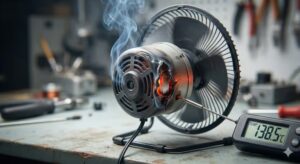
Undoubtedly, it’s the angry complaint from a customer: “I just bought this fan last week, it stopped spinning, and the motor is burning hot!”
For B2B buyers, the Return Rate (RMA) is a profit killer.
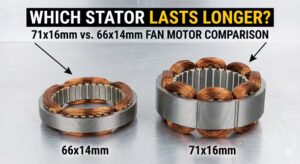
Often, a fan’s short lifespan isn’t due to poor assembly, but rather a small decision made during the initial procurement: the material of the motor winding wire.
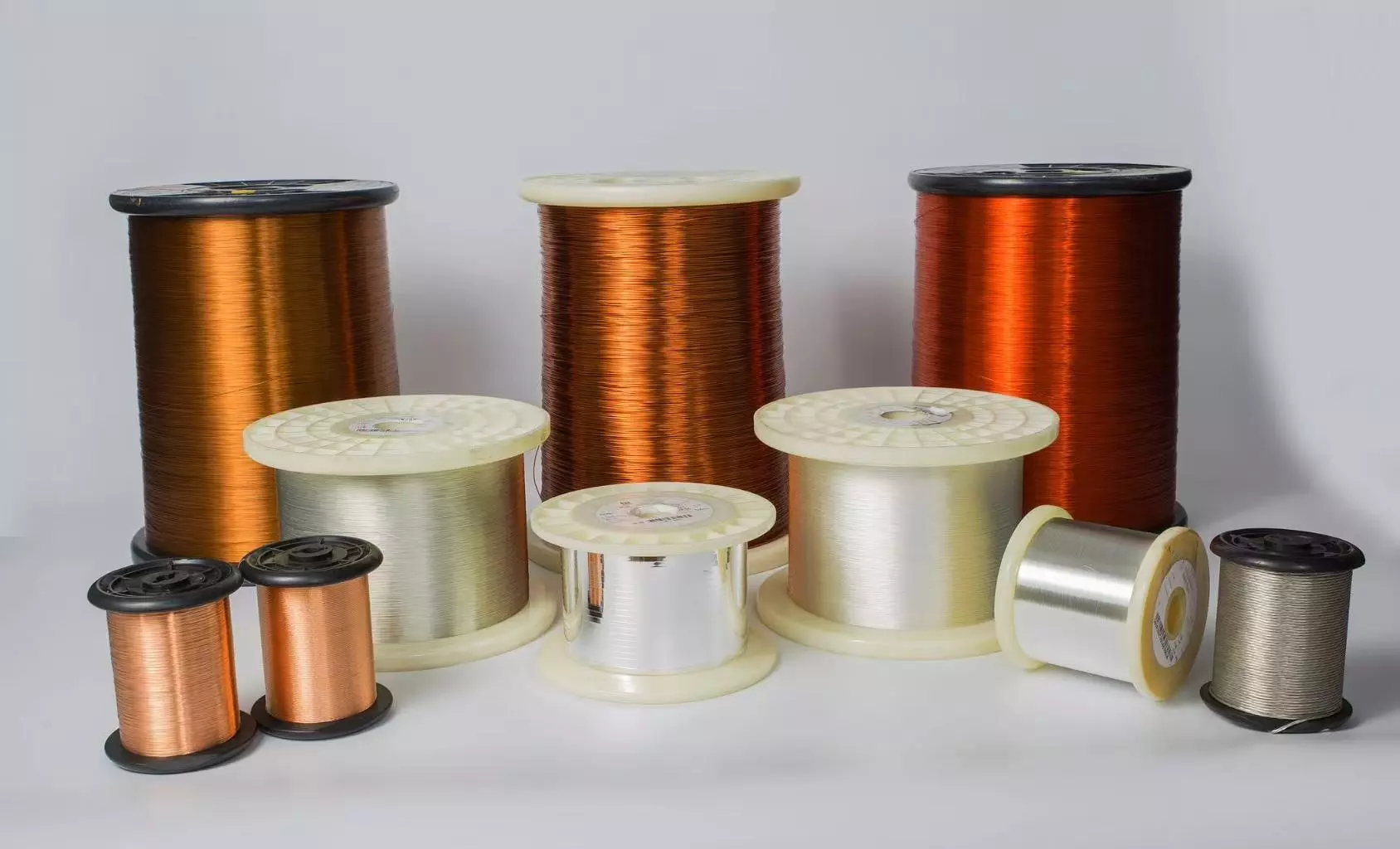
In today’s article, as a professional fan manufacturing factory, we will break down the real differences between Full Copper, Copper Clad Aluminum (CCAW), and Aluminum motors to help you balance cost versus quality.
1. The Painful Truth: The Real Cost of Going “Cheap”
When quoting prices, we often encounter this scenario: clients insist on using the cheapest aluminum wire motors to save $1.00 – $1.50 per unit.
However, saving that $1.50 today might cost you heavily in the future:
- High After-Sales Costs: The labor cost to repair a single fan in your local market is likely far higher than the procurement savings.
- Reputation Damage: If your brand gets labeled as “unreliable” or “prone to breaking,” changing consumer perception is nearly impossible.
2. In-Depth Comparison: Copper vs. CCAW vs. Aluminum
To help you make the smartest purchasing decision, we have quantified the differences between these three materials across four key dimensions: Temperature Rise, Durability, Cost, and Weight.
See the comparison table below:
| Key Metrics | Full Copper Motor 🏆 | CCAW Motor (Copper Clad Aluminum) ⚖️ | Aluminum Motor ⚠️ |
| A. Temperature Rise | Excellent (Cool) Low heat generation. The motor remains “cool” even during long operation. Ideal for 24/7 use. | Moderate Performance sits between copper and aluminum. Stable, but caution is needed in extreme heat. | Poor (Hot) High resistance leads to rapid heating. If the temp rise exceeds the critical point (e.g., 75K), the insulation melts, leading to Burnout. |
| B. Durability & Lifespan | 5 – 10 Years Corrosion-resistant with strong solder points. Extremely hard to damage. | 3 – 5 Years Resistant to oxidation with stable performance. | 1 – 2 Years Aluminum is difficult to solder (prone to “cold solder” joints) and breaks easily due to oxidation, especially in humid areas. |
| C. Cost Analysis | High Costs approx. $1.5 – $2.5 USD more than Aluminum (depending on current copper prices). | Medium Costs approx. $0.5 – $1.0 USD more than Aluminum. | Low The cheapest option. Suitable only for price-sensitive orders. |
| D. Weight & Feel | Heavy High density. Feels heavy and solid in the hand, giving buyers a sense of “premium quality.” | Medium Moderate weight. | Light Noticeably lighter. The fan may feel “flimsy” or top-light. |
3. Buyer’s Guide: Which One Fits Your Market?
- Scenario 1: Countries with Unstable Power Grids (e.g., Parts of Africa, South Asia)
- Must Choose: Full Copper.
- Reason: Voltage fluctuations cause sudden current spikes. Aluminum motors will burn out instantly under these conditions. Full Copper is robust enough to survive harsh electrical environments.
- Scenario 2: Promotional Items & Giveaways
- Acceptable Choice: Aluminum.
- Reason: For summer giveaways or short-term use where price is the absolute priority.
- Scenario 3: Mid-Range Supermarkets & OEM Brands
- Recommended Choice: CCAW (Copper Clad Aluminum).
- Reason: It offers better performance and lifespan than pure aluminum while maintaining a reasonable price point. This is currently the mainstream choice for many export markets.
4. Our Integrity & Quality Control
In the fan manufacturing industry, we know that some unethical factories deceive clients by passing off aluminum as copper to pocket the difference.
As your long-term partner, we make this Integrity Statement:
“We Promise: What You See Is What You Get. If we confirm ‘Full Copper’ in the contract, every single fan you receive will be 100% Full Copper. We never substitute inferior materials, and we never gamble with our clients’ business.”
To uphold this promise, we enforce strict testing methods on our production line:
- Resistance Tester:Every batch of incoming wire undergoes precision resistance testing. Copper and Aluminum have distinct resistance rates; no material falsification can escape this data.
- Salt Spray Test:Simulating sea freight and coastal humidity, we test the motor coil’s corrosion resistance to ensure aluminum wires or solder points won’t break due to oxidation.
- Aging Room Test:Before shipment, we conduct long-duration operation tests to monitor Temperature Rise. If a motor overheats or shows abnormal data, it never leaves our factory.
Conclusion
In the fan industry, the old saying holds true: “You get what you pay for.”
Since you are already paying expensive ocean freight to ship containers halfway across the world, why fill them with inferior products?
Not sure which motor configuration is best for your specific market?
Contact our sales team today. We will provide the optimal motor configuration proposal based on your local voltage conditions and competitor analysis.