12" 
By Size
12 Inch Table Fan
A compact electric table fan for desks, counters, and smaller retail formats. Configure the grille, blade, voltage, plug, color, logo, and carton.
Ask About 12 Inch

Wholesale Table Fan Supplier
SF Fan manufactures 12-, 16-, and 18-inch electric table fans for importers, distributors, retail programs, and private-label brands. Customize the motor, airflow, blade and grille design, voltage, plug, color, logo, and export packaging for your market.
Send your specification, quantity, and destination market for factory-direct table fan wholesale pricing.

Table Fan Range
Start with a 12-, 16-, or 18-inch table fan, then define the airflow, noise level, color, voltage, plug, branding, and packaging required for your wholesale or private-label program.
By Size
A compact electric table fan for desks, counters, and smaller retail formats. Configure the grille, blade, voltage, plug, color, logo, and carton.
Ask About 12 Inch
By Size
A mainstream household table fan size with a practical balance of airflow and footprint for distributors, retailers, and private-label brands.
Ask About 16 Inch By Size
A larger table fan format for wholesale programs that need broader air delivery, a larger grille, and stronger product presence in the market.
Ask About 18 Inch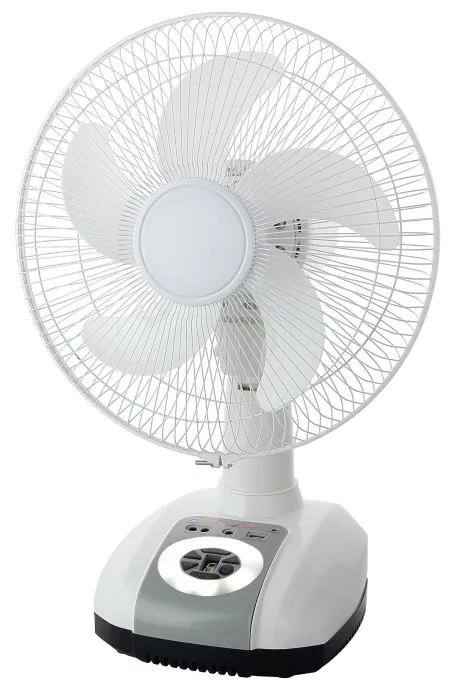
By Product Positioning
Compact, mini, slim, and easy-to-move AC table fan directions for buyers serving desks, counters, small rooms, and limited-space applications.
Customize Compact Fans
By Product Positioning
Higher-airflow configurations developed around your target motor, blade, grille, voltage, safety requirements, and destination market.
Ask About High-Speed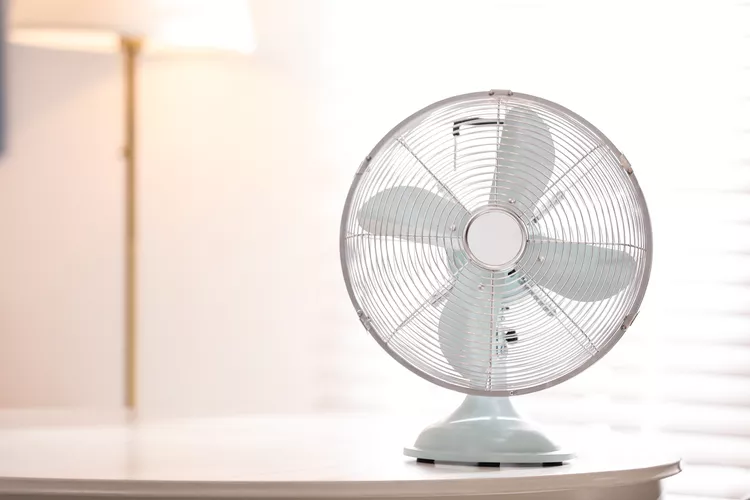
By Product Positioning
Low-noise table fan configurations for bedrooms, offices, study areas, and other applications where operating sound is an important buying factor.
Ask About Low-NoiseTable Fan Specification Guide
A table fan quotation is only accurate when the motor, blade, grille, electrical system, and packing route are defined together. Use this guide to prepare a clear OEM / ODM specification for SF Fan before sampling.
The winding material affects heat performance and cost, while the motor-core diameter and lamination-stack thickness determine how much blade load the motor can support.
Copper has better electrical conductivity and thermal performance than aluminum. In a correctly designed motor, it handles heat better and is less likely to overheat or burn out under the specified load—but the material cost is higher.
Aluminum windings support a more economical table fan program. They require careful matching of the stack size, wire specification, blade pitch, and rated power so the operating temperature remains within the approved range.
| Table Fan Size | Available Motor Size | Selection Direction |
|---|---|---|
| 12 Inch | 66 × 10 / 12 / 14 mmThree stack-thickness choices for different airflow and cost targets. | Confirm winding material, blade pitch, rated power, speed, and temperature-rise requirement together. |
| 16 Inch | 66 × 12 / 14 / 16 / 18 mm71 × 12 / 14 / 16 / 18 mmTwo motor-core diameters with four stack choices. | Use the selected blade load and airflow target to decide between the 66 mm and 71 mm platforms. |
| 18 Inch | Confirm by Selected ModelNo motor-stack dimension is assumed at inquiry stage. | SF Fan matches the motor after the 450 mm blade, pitch angle, speed, power, and grille are fixed. |
Fan size means the blade-sweep diameter—not the wire-grille diameter. Blade shape, count, pitch, weight, and material must be tuned as one system with the motor.
| Fan Size | Dimensions | Shape | Angle | Material |
|---|---|---|---|---|
| 12 Inch | 300 mm Blade SweepCompact format for tabletops, personal cooling, and smaller rooms. | 3 or 5 BladesRounded / lotus profiles for smoother air; scimitar profiles for stronger, more focused wind. | 10°–18° Engineering RangeLower or medium pitch is commonly easier on a compact motor; validate against the 66 mm stack. | PP / AS / ABS / AluminumSelect by cost, rigidity, impact resistance, appearance, and motor load. |
| 16 Inch | 400 mm Blade SweepThe standard household balance between coverage, airflow, and footprint. | 3 / 5 / 7 BladesLotus for softer airflow; scimitar for stronger wind; banana-leaf profiles for a long, narrow form. | 10°–18° Engineering RangeTune pitch to the selected 66 mm or 71 mm motor, rated power, noise, and airflow target. | PP / AS / ABS / AluminumPlastic supports color and cost options; metal requires load and balance validation. |
| 18 Inch | 450 mm Blade SweepLarger coverage for open rooms and buyers seeking greater air delivery. | Power or Comfort ProfilesA 3-blade scimitar can favor stronger air throw; more blades can produce a smoother breeze. | 10°–18° Engineering RangeUse a steep pitch only when the selected motor is rated for the higher aerodynamic load. | PP / AS / ABS / AluminumFinal blade weight, balance, hub, and guard clearance are confirmed by model. |
Blade reference: lower pitch reduces motor load but moves less air; a steeper pitch moves more air and requires more motor power. A steep blade on an undersized motor can cause overheating.
Read the SF Fan blade guideEconomical and flexible. It resists cracking, but its pitch can flatten over time if the design is too soft.
Stiff, shape-stable, and often transparent. It offers good value but is more brittle under impact.
Durable, shape-stable, and impact resistant. It suits a higher-grade product but costs more.
The grille must provide safe blade clearance while matching the fan head, front/rear guard, ring, wire spacing, coating, and packaging dimensions.
Grille diameter paired with a nominal 300 mm blade sweep.
Select the guard size according to the head design and target model.
The final guard diameter is fixed after the 450 mm blade and housing are selected.
Blade-sweep diameter and grille diameter are different measurements. SF Fan confirms blade-to-guard clearance, wire spacing, front/rear alignment, guard strength, and finish before approval.
Electrical standards vary within Europe, Africa, the Middle East, Southeast Asia, and Latin America. Always specify the destination country—not only the region—before production.
Voltage and frequency are market requirements; rated power is a model requirement. Final wattage is confirmed from the selected 12 / 16 / 18-inch size, motor winding and stack, blade pitch, speed, airflow target, and approved test sample.
| Destination Market | Voltage / Frequency / Rated Power | Common Plug Direction | Purchase-Specification Notes |
|---|---|---|---|
| Continental EU | 230V~ / 50HzRated Power: By ModelProduct voltage is commonly specified within a 220–240V range; final watts follow the approved motor and blade setup. | Type C / E / FChoose by target country, protection class, and buyer requirement. | Confirm two-core or earthed construction, cord specification, rating label, and required EU compliance documents. |
| United Kingdom & Ireland | 230V~ / 50HzRated Power: By ModelMatch the approved motor, blade load, wattage, and rating-label range. | Type GFused plug; confirm fuse rating and cord construction. | Confirm plug approval, fuse, wiring, cord length, label, manual, and destination compliance before the sample. |
| Italy / Switzerland / Denmark | 230V~ / 50HzRated Power: By ModelSame nominal supply, but final wattage and national plug requirements are confirmed separately. | Type L / J / KAccepted alternatives can vary, so the buyer must confirm the exact plug. | Do not substitute a generic “European plug” without checking the destination-country and sales-channel requirement. |
| Africa | Nigeria / Ghana / South Africa: 230V~ / 50HzKenya: 240V~ / 50HzRated Power: By ModelOther national exceptions exist, so the exact country must be stated in the inquiry. | Type C / D / E / F / G / M / NNorth Africa commonly uses C/E/F; Nigeria may use D/G; Kenya commonly uses G; South Africa uses M/N. | Confirm the exact African country, two-core or three-core cord, earth requirement, plug approval, voltage tolerance, label, and certification plan. |
| Middle East | Most GCC Markets: 220–240V~ / 50HzSaudi Arabia: 230V~ / 60HzRated Power: By ModelMotor and capacitor must match the approved frequency. | Type G Common in GCCType C / F / G / H and other systems are used depending on the destination country. | UAE, Qatar, Kuwait, Bahrain, Oman, and Saudi programs commonly request Type G, but frequency, fuse, cord, and national conformity still require country-level confirmation. |
| Southeast Asia | Malaysia / Singapore / Indonesia / Vietnam / Thailand: 220–240V~ / 50HzPhilippines: 220V~ / 60HzRated Power: By ModelConfirm motor, capacitor, and rating label for 50Hz or 60Hz operation. | Type A / B / C / D / F / G / OMalaysia, Singapore, and Brunei commonly use G; Indonesia C/F; Thailand A/B/C/O; Philippines A/B/C. | Do not use one “Southeast Asia” plug for the whole region. Confirm country, plug, cord, voltage, frequency, certification, and manual language. |
| Latin America | Mexico: 127V~ / 60HzColombia: 110V~ / 60HzBrazil: 127V or 220V~ / 60HzChile / Argentina: 220V~ / 50HzRated Power: By Model | Type A / B / C / F / I / L / NMexico/Colombia commonly use A/B; Brazil N; Chile C/L; Argentina C/I. | Brazil may require 127V or 220V at 60Hz. Confirm the exact country, city or sales channel, voltage, plug, cord, label, and conformity route. |
| United States & Canada | 120V~ / 60HzRated Power: By ModelMotor and capacitor must be built for the approved voltage, frequency, and wattage. | Type A / BGrounding depends on product construction and certification plan. | Confirm cord type, polarized / grounded configuration, label, and required test or certification scope. |
| Other Export Markets | 110–127V or 220–240V · 50/60HzRated Power: By ModelCountry-specific confirmation and sample testing are required. | Country-SpecificPlug, pin, earth, fuse, and cord rules differ by market. | Provide the exact country and channel so SF Fan can quote the correct electrical configuration. |
Regional values are sourcing references. IEC 60038 covers standard voltage values, while IEC TR 60083 covers national household plug and socket systems. The approved purchase specification must follow the exact destination country.
IEC 60038 IEC TR 60083Before sampling, confirm rated voltage, frequency, rated power (W), plug type, cord length and gauge, two-core / three-core wiring, earth or fuse details, rating label, manual language, and certification scope.
Packing should be selected from the total landed-cost model: retail format, carton volume, freight, import duty, local labor, tools, testing, and assembly quality all matter.
A complete fan in its own retail or brown carton, ready for distribution and sale.
Two complete units packed together to reduce packing cost and use warehouse or freight space more efficiently.
Main modules or parts are packed separately for final assembly, testing, and packing in the destination market.
| SKD Level | Typical Carton Condition | Local Operation & Trade-Off |
|---|---|---|
| High Integration | Major assemblies are pre-builtMotor, housing, controls, oscillation mechanism, and selected guard parts can arrive as assembled modules. | About 1–2 main assembly stepsEasiest local operation and lower skill requirement, but less carton-volume reduction. |
| Balanced SKD | Motor module is partly assembledBlade, front grille, base, and hardware are packed separately with protected components. | About 3–4 main assembly stepsA practical balance between freight efficiency, labor, process control, and finished-product quality. |
| High Knock-Down | Core parts are packed separatelyMotor, front/rear grille, blade, body, base, controls, hardware, and possibly cord parts are supplied as separate items. | More labor, tools, and QC requiredLowest assembly level from the factory, but local wiring, balancing, safety testing, and trained workers may be necessary. |
All configurations above are sourcing references. Final motor, blade, grille, electrical setup, labeling, certification, packing structure, quantity, and price are confirmed against the selected model, destination market, approved sample, quotation, and purchase contract.
Include your target country, fan size, motor winding and stack, blade, grille, voltage, frequency, rated power, plug, quantity, branding, and CBU / SKD / CKD packing requirement. SF Fan will review the complete configuration before quoting.
Table Fan Wholesale
SF Fan supplies 12, 16, and 18-inch table fans for importers, distributors, wholesalers, retail chains, and private-label brands. Every bulk quotation is based on the confirmed product specification, destination market, packaging method, and order quantity.
SF Fan quotes the complete bill of materials instead of using one generic price for every table fan. This makes it easier to compare the same specification across samples, purchase orders, and repeat orders.
Fan size, copper or aluminum winding, motor core and stack, blade, grille, control, oscillation, and housing structure.
Voltage, frequency, rated power, plug, cord, labeling, manual language, and required certification scope.
Color, logo, badge, rating label, retail carton, master carton, protective materials, and CBU / SKD / CKD structure.
Order quantity by model, container plan, component allocation, production season, and agreed quotation terms.
A clear specification at the beginning reduces price changes, sample revisions, and packing mistakes later in the order.
Share the destination country, preferred size, quantity, sales channel, target positioning, and reference model or photos.
We align the motor, blade, grille, controls, electrical setup, branding, certification, and packing before final quotation.
The production lead time is confirmed after the model, approved sample, carton artwork, quantity, deposit, and order season are fixed.
Production follows the approved order standard. Shipment data and repeat-order references are retained for the next purchasing cycle.
Quotation validity, production schedule, payment terms, inspection requirements, and shipment date are stated in the final quotation or sales contract.
Table fan loading quantity changes with the model, grille diameter, base and housing structure, pieces per carton, and packing method. SF Fan calculates the final container quantity only after the packing specification is confirmed.
For mixed-model orders, each model must still meet the agreed MOQ and the loading plan must account for carton dimensions, gross weight, and practical container utilization.
Suitable for smaller shipment plans when the selected model, MOQ, carton size, and commercial terms fit the container.
Common for larger wholesale programs and repeat orders that require more efficient logistics cost per unit.
Whether you are launching a first container or maintaining an established range, SF Fan matches the product specification, packaging, documents, and production plan to the way your business buys and resells table fans.
Market-specific voltage, plug, labeling, certification support, container planning, and stable repeat-order specifications.
Clear product tiers, quantity-based factory quotation, practical packing options, and supply planning for regional resale.
Logo, color, rating label, manual, barcode, retail carton, master carton, and approved-sample control for branded programs.
For repeat orders, SF Fan checks the previous approved specification, artwork, and packing reference before production. Any component, material, certification, or packaging change is reconfirmed in the new quotation and order documents.
Send your target country, 12 / 16 / 18-inch model requirement, quantity by model, preferred specification, branding, packing method, and 20GP or 40HQ plan. SF Fan will prepare the matching factory quotation.
Table Fan Factory
SF Fan organizes table fan manufacturing around the approved product specification, sample, artwork, and packing plan. For buyers comparing table fan manufacturers in China, this section shows how a confirmed order moves through the factory from assembly preparation to finished cartons.

Production begins after the commercial and technical details are confirmed. The team prepares the correct components, work instructions, labels, and packing materials for the selected table fan model.
The exact workstation arrangement changes with the model and packing method, but each order follows a defined flow so the correct parts and documents move together through production.
Housings, bases, controls, fasteners, wiring, and accessories are prepared against the confirmed model BOM.
The selected motor is mounted to the fan structure and the required wiring and connections are assembled.
The rear guard, blade, front guard, fasteners, and related parts are installed for the selected configuration.
Assembled units move through the required electrical and operating checks for the order specification.
Product appearance, assembly condition, accessories, labels, and packing readiness are reviewed before release.
The fan and accessories are packed in the approved CBU, SKD, or CKD structure with the correct documents.
This is the production-flow overview. Detailed incoming inspection, electrical safety, functional testing, sampling, records, and acceptance criteria are covered in the quality-control section.
Workers assemble the approved structure while test stations support the transition from completed units to final inspection and packing. Equipment and fixtures vary by product model and order requirement.
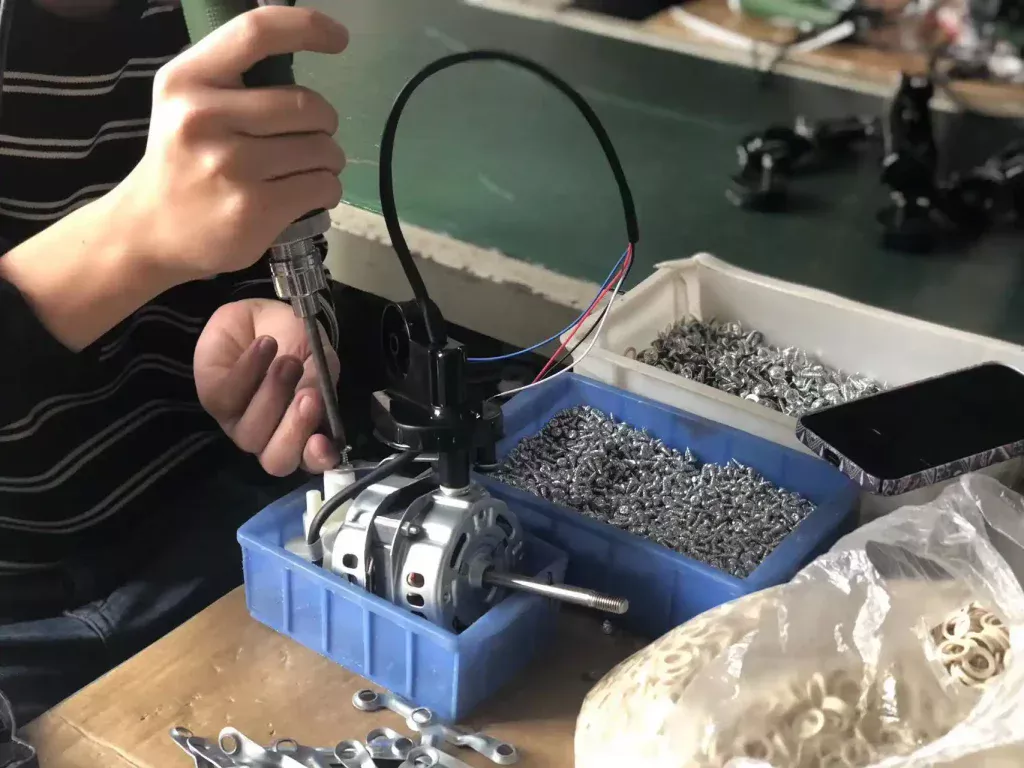

Factory images show SF Fan production and testing areas. The workstation layout, fixtures, and inspection sequence may change according to the selected table fan and order specification.
A table fan factory cannot build consistently from a product name or inch size alone. Production needs one confirmed reference set that connects the technical specification, branding, packaging, and shipment format.
Size, motor, blade, grille, controls, voltage, frequency, plug, cord, and rated power.
Approved sample, colors, logo position, badge, housing details, and surface finish.
Rating label, manual, barcode, retail carton, master carton, marks, and language files.
CBU, SKD, or CKD arrangement, pieces per carton, accessories, container plan, and delivery details.
Review our full production process or send your table fan specification, target market, quantity, branding, and packing plan for a factory-based project review.
Table Fan Quality Control
SF Fan checks components, assembly, electrical safety, operation, and packing against the approved table fan specification. The inspection plan is aligned with the selected model, destination market, confirmed sample, and order requirements before finished cartons are released for shipment.

Inspection findings are evaluated by their effect on safety, function, assembly, and appearance. Nonconforming material or finished units are identified and held for review instead of moving directly to packing.
Safety, electrical protection, or regulatory nonconformity.
Function, assembly, motor, oscillation, or packing failure.
Appearance or finish variation that does not prevent operation.
The control path connects incoming parts with in-process checks and final release. This helps the motor, blade, grille, electrical configuration, labels, and packing remain consistent with the approved order.
Motors, blades, grilles, plugs, cords, switches, plastic parts, capacitors, wiring, and cartons are checked before use.
The approved sample and BOM guide part fit, wiring, fasteners, blade clearance, guard assembly, controls, and appearance.
Applicable safety protection, rated input, motor temperature rise, and reduced-voltage starting are checked for the model.
Speed settings, rotation, oscillation, tilt, controls, noise, vibration, and stable operation are reviewed.
Finished fans, accessories, labels, manuals, barcodes, carton details, and specified packing tests are verified before release.
Incoming parts follow the separate Incoming Quality Control workflow. Assembly checkpoints are coordinated with the confirmed Production Process.
The exact method and acceptance limit must match the approved model and target market. The following checks form the practical review framework for 12-inch, 16-inch, and 18-inch table fan orders.
Check: insulation protection, grounding where applicable, wiring, plug, cord, switch, and accessible electrical parts. Acceptance: the applicable market requirement and approved electrical specification.
Check: motor operating condition and temperature rise under the defined voltage, speed, blade load, and test duration. Acceptance: the confirmed motor design and order test plan.
Check: reliable starting under the reduced-voltage condition defined for the model and market. Acceptance: the fan starts consistently without abnormal sound, stalled rotation, or overheating.
Check: each speed setting, rotational direction, rated input, and measured speed where required. Acceptance: the approved performance specification and defined production tolerance.
Check: oscillation start and stop, movement range, smooth travel, stability, tilt position, and mechanism noise. Acceptance: consistent movement without sticking, interference, or excessive looseness.
Check: motor sound, blade balance, guard contact, base stability, vibration, and abnormal mechanical noise at each speed. Acceptance: the approved reference sample and any agreed test limit.
Check: retail or master carton protection, internal supports, product movement, and damage after the specified test sequence. Acceptance: the confirmed packing method, carton standard, and order requirement.
Test voltage, duration, allowable temperature rise, speed tolerance, noise limit, reduced-voltage condition, sample size, and drop-test method are not assumed to be universal. They are confirmed against the selected model, applicable market requirements, approved specification, inspection plan, and contract.
Quality control combines visual and dimensional review with suitable test equipment. Inspection fixtures and methods are selected according to the fan model, electrical configuration, market, and agreed test plan.
Factory images show SF Fan inspection and testing areas. Test equipment, fixtures, sampling level, and inspection sequence may change according to the selected table fan and order requirements.
A release decision should be traceable to the order reference, inspection plan, and approved specification. Findings are recorded so nonconforming material can be reviewed before finished goods proceed to shipment.
Product model, order reference, checkpoints, findings, and release status are documented for the inspection performed.
Affected materials or units are identified and held for evaluation, rework, replacement, or another defined disposition.
Final release follows the agreed inspection requirement. Buyer or third-party inspection can be coordinated when specified.
Send the model, destination market, electrical specification, packaging method, and any required test standard. You can also review how SF Fan manages production before final inspection.
Table Fan Applications & Buyer Types
The same table fan range is not suitable for every buyer or retail channel. SF Fan helps importers and distributors plan 12, 16, and 18-inch models around local demand, target price, airflow expectations, shelf presentation, after-sales needs, and container strategy.
Each sales channel values a different mix of size, appearance, performance, packaging, documentation, and reorder support. The six buyer profiles below show the practical starting point for product selection.
Build a structured range across sizes, price levels, electrical configurations, retail packs, and destination-market requirements.
Project focus: full BOM, compliance scope, container planning, and repeat-order control.Prioritize clear product tiers, practical cartons, familiar controls, model-specific spare parts, and specifications that are easy to reorder.
Project focus: price positioning, carton efficiency, stock rotation, and replenishment.Coordinate compact shelf presentation, consumer-facing features, color, barcode, manual, rating label, and retail carton artwork.
Project focus: shelf dimensions, packaging language, barcode data, and delivery windows.Select a balanced assortment for local dealers, including standard household models and high-speed table fans for hotter markets.
Project focus: dealer price levels, regional demand, stock mix, and repeat-order timing.Develop a recognizable product through model selection, color, logo, badge, labels, manual, carton design, and controlled specifications.
Project focus: approved samples, artwork control, channel differentiation, and brand continuity.Stock straightforward, portable table fans with familiar controls, durable packing, clear specifications, and sizes suited to local shoppers.
Project focus: practical model selection, pieces per carton, display needs, and spare parts.Buyer type defines how the product is purchased, while the end-use environment helps define size, airflow, footprint, sound target, controls, appearance, and retail message.
Compact footprint, stable base, practical oscillation, and an agreed low-noise target for everyday household use.
Typical direction: 12 or 16-inch low-noise modelsSmall or portable table fan formats suit counters, desks, reception areas, and workspaces with limited placement area.
Typical direction: 12-inch compact table fansSimple controls, focused airflow, easy placement, and a housing that can handle frequent daily operation in customer-facing areas.
Typical direction: 12 or 16-inch standard modelsHigher-airflow positioning may require a larger blade, steeper pitch, suitable motor, stable grille, and matched rated power.
Typical direction: 16 or 18-inch high-speed models“Silent table fan” is a market description, not a zero-noise claim. Low-noise and high-speed positioning must be confirmed against the selected motor, blade, grille, speed, power, test method, and approved performance target.
A clear product position helps SF Fan narrow the suitable platform and quotation basis. Final specifications are confirmed from the target market, actual sample, and complete order requirements.
12-inch platform, base size, carry handle, oscillation, controls, carton dimensions, and target price.
16-inch platform, motor and blade combination, grille, voltage, plug, color, labels, and retail carton.
16 or 18-inch platform, motor load, blade pitch, rated power, temperature rise, stability, and grille clearance.
Motor, blade balance, speed settings, vibration, test distance, ambient conditions, and agreed noise target.
Product positioning does not replace the technical specification. SF Fan confirms the complete BOM, electrical configuration, branding, packaging, MOQ, inspection requirements, and container plan before accepting an order.
Tell SF Fan where you sell, who buys from you, your destination market, preferred size, target price level, quantity, branding, and packing plan. We will review a suitable table fan direction before preparing the quotation.
Table Fan Buying FAQ
These answers cover the commercial and technical questions that normally affect a table fan quotation. Final details depend on the selected 12, 16, or 18-inch model, destination market, order quantity, approved specification, branding, packing, and trade terms.
SF Fan’s standard MOQ is 1,000 pieces per model and confirmed configuration. If an order combines several models, each model normally needs to meet its confirmed MOQ. Special colors, components, carton printing, or new tooling may require a different minimum. See the wholesale order requirements.
SF Fan’s core table fan range covers 12, 16, and 18-inch models. Available housing, base, motor, blade, grille, controls, and packing options vary by platform. Buyers can compare the current table fan range before confirming the detailed specification.
Yes. OEM and private-label options can include the product configuration, housing color, blade color, logo, center badge, rating label, manual, barcode, retail carton, master carton, and shipping marks. Every option is checked for feasibility, cost, MOQ, and timing before approval. Review the OEM and private-label process.
Yes, when the selected model and components support the required market configuration. The buyer should state the destination country, voltage, frequency, rated power requirement, plug type, cord length, conductor specification, grounding or fuse requirement, and applicable certification scope. These items are confirmed together in the table fan specification.
Yes. A custom retail carton can include approved product images, brand colors, logo, selling points, barcode, model details, electrical information, language, marks, and importer information. The dieline, artwork, printing method, carton material, internal protection, and master-carton arrangement must be approved before mass printing.
There is no single wholesale price for every table fan. The quotation depends on the size, housing, copper or aluminum motor winding, motor-core size and stack, blade, grille, controls, voltage, plug, cord, certification scope, color, branding, packaging, order quantity, packing format, and trade terms. SF Fan quotes from the confirmed BOM and commercial requirement, not from the inch size alone.
The final lead time is confirmed after the model, complete specification, approved sample, artwork, packing method, order quantity, deposit, material availability, and production season are fixed. Custom tooling or new development requires additional time. The agreed schedule is written into the quotation or sales contract before production begins.
The loading quantity cannot be confirmed from the fan diameter alone. It changes with the housing and base, grille diameter, packing structure, carton dimensions, pieces per carton, gross weight, and CBU, SKD, or CKD format. SF Fan calculates the 40HQ loading quantity from the final approved packing data. Mixed-model loading is reviewed only after each carton is confirmed.
Yes. Model-specific spare parts can be planned with the order. The suitable list may include items such as switches, capacitors, blades, grille parts, fasteners, plugs, cords, or other agreed service components. The part type, quantity or ratio, packing method, price, and responsibility should be confirmed before production.
SF Fan provides a one-year warranty framework for confirmed table fan orders. The warranty start point, covered defects, exclusions, required claim evidence, spare-parts support, and available remedy must follow the final quotation or sales contract. Product damage caused by incorrect assembly, use, storage, transport, or unauthorized modification is evaluated against the agreed terms.
Final Table Fan Inquiry
Send SF Fan your basic purchasing requirements. Share the preferred size, quantity, voltage, and destination market. We can then review the suitable table fan configuration, prepare a factory quotation, and advise on packing and container loading.
If the final specification is not fixed yet, send a reference photo, target market, or product direction. SF Fan can help define the starting configuration with you.
GET TABLE FAN QUOTE One shared header popup handles the inquiry. No additional form is added to this section.Quotation, lead time, packing, inspection, warranty, and shipment terms are confirmed in the final quotation or sales contract.
 Optimized by Seraphinite Accelerator