
How Much Electricity Does a Table Fan Use? Wattage, Cost, and Efficiency Guide
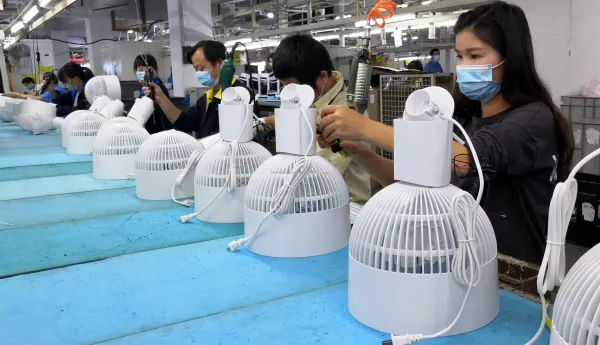
Table of Contents
A table fan is one of the simplest ways to stay cool. It is small, easy to move, and much cheaper to run than an air conditioner. But many people still ask the same question: how much electricity does a table fan use?
The short answer is this: most table fans use 35 to 60 watts. A small desk fan may use less. A high-speed fan may use more. The real cost depends on three things:
- The fan wattage
- How many hours you use it
- Your local electricity price
This guide explains table fan wattage, power use, running cost, efficiency, and B2B sourcing points.
What Is Table Fan Wattage?
Table fan wattage means how much electric power the fan uses when it runs. It is shown in watts, often written as W.
A 50W table fan uses 50 watts of power while it is running. A 30W fan uses less power. A 100W fan uses more power.
Watts Are Not the Same as Electricity Cost
Watts only show power demand. They do not show the full electricity bill by themselves.
To know the cost, you also need to know how long the fan runs.
For example:
| Fan power | Time used | What it means |
|---|---|---|
| 50W | 1 hour | Low electricity use |
| 50W | 8 hours | Common overnight use |
| 50W | 30 days | Monthly use adds up |
A fan with higher wattage usually uses more electricity. But wattage is not the only thing that matters. A good fan can move more air with less power. That is why efficiency is important.
What Is Efficiency?
Efficiency means how much useful airflow a fan gives for the same amount of electricity.
In simple words, it means:
How much air can a fan move for every 1 watt of electricity it uses?
For example:
- A fan that uses less power but gives the same airflow is more efficient
- A fan that uses more power but gives the same airflow is less efficient
| Fan | Power | Airflow | Efficiency |
|---|---|---|---|
| Fan A | 60W | 60 m3/min | About 1 m3/min/W |
| Fan B | 50W | 60 m3/min | About 1.2 m3/min/W |
Fan B uses less power but gives the same airflow. So Fan B is more efficient and saves more electricity.
A Simple Way to Think About It
Think of wattage like the speed of water from a tap.
- Watts = how fast electricity is being used
- Hours = how long the fan runs
- kWh = total electricity used
- Electricity rate = price for each kWh
Your electricity bill is based on kWh, not only on watts.
Most Table Fans Use 35W to 60W
A normal table fan often uses 35W, 40W, 45W, 50W, or 60W. This is a low power range compared with many home appliances.
| Appliance | Typical power use |
|---|---|
| LED bulb | 5-15W |
| Table fan | 35-60W |
| Laptop | 30-90W |
| TV | 50-150W |
| Air conditioner | 700-2500W+ |
A table fan uses more electricity than a small LED light. But it uses far less electricity than an air conditioner.
Bigger Does Not Always Mean Better
A bigger fan may move more air. But it may also use more power. The best choice depends on room size and how close you sit to the fan.
| Room or use case | Good fan choice |
|---|---|
| Study desk | Mini USB fan or desk fan |
| Bedside cooling | Small desk fan or table fan |
| Small bedroom | 35-50W table fan |
| Living room | 50-75W table or pedestal fan |
| Hot kitchen | High-airflow fan with a stable base |
If you only need airflow for one person, a smaller fan may be enough.
How to Calculate Table Fan Power Consumption
You can calculate table fan electricity use with one simple formula:
Electricity use (kWh) = Wattage x Hours used / 1000The unit kWh means kilowatt-hour. Many people call one kWh one “unit” of electricity.
Example: A 50W Table Fan for 8 Hours
50 x 8 / 1000 = 0.4 kWhA 50W table fan running for 8 hours uses 0.4 kWh.
If your electricity price is $0.15 per kWh, the cost is:
0.4 x $0.15 = $0.06So, it costs about 6 cents to run the fan for 8 hours.
Quick Power Use Table
| Fan wattage | 1 hour of use | 8 hours of use | 24 hours of use |
|---|---|---|---|
| 30W | 0.03 kWh | 0.24 kWh | 0.72 kWh |
| 50W | 0.05 kWh | 0.40 kWh | 1.20 kWh |
| 75W | 0.075 kWh | 0.60 kWh | 1.80 kWh |
| 100W | 0.10 kWh | 0.80 kWh | 2.40 kWh |
This table shows why time matters. A small fan can still use a fair amount of electricity if it runs all day.
Check the Fan Label
Most fans have a label on the base, motor cover, or power adapter. Look for:
- Rated power
- Power input
- Wattage
- W
- Voltage and current
You may see something like this:
Rated Power: 45WThis means the fan uses about 45 watts at normal rated operation.
How Much Does It Cost to Run a Table Fan?
The cost depends on your local electricity price. In this guide, we use $0.15 per kWh as a simple example.
The formula is:
Electricity cost = kWh used x electricity priceExample: Cost of Running a 50W Fan
| Use time | Electricity use | Cost at $0.15/kWh |
|---|---|---|
| 1 hour | 0.05 kWh | $0.0075 |
| 8 hours | 0.40 kWh | $0.06 |
| 24 hours | 1.20 kWh | $0.18 |
| 30 days, 8 hours per day | 12 kWh | $1.80 |
A 50W fan is not expensive to run. Even if you use it every night for a month, the cost may be only a few dollars in many places.
Why Your Real Cost May Be Different
Your actual cost may change because electricity rates are different by country, state, city, and time of day.
| Electricity rate | Cost for a 50W fan used for 8 hours |
|---|---|
| $0.10/kWh | $0.04 |
| $0.15/kWh | $0.06 |
| $0.25/kWh | $0.10 |
| $0.35/kWh | $0.14 |
If your electricity rate is high, the cost will be higher. But even then, a table fan is still a low-power appliance.
Cost Examples: 30W, 50W, 75W, and 100W
Here is a clear cost table using $0.15 per kWh.
| Wattage | 1 hour | 8 hours | 30 days, 8 hours per day |
|---|---|---|---|
| 30W | $0.0045 | $0.036 | $1.08 |
| 50W | $0.0075 | $0.060 | $1.80 |
| 75W | $0.0113 | $0.090 | $2.70 |
| 100W | $0.0150 | $0.120 | $3.60 |
Fast Answers
| Question | Answer at $0.15/kWh |
|---|---|
| How much does a 30W fan cost for 8 hours? | About $0.04 |
| How much does a 50W fan cost overnight? | About $0.06 |
| How much does a 75W fan cost overnight? | About $0.09 |
| How much does a 100W fan cost overnight? | About $0.12 |
Monthly Cost Is Still Low
Even a 100W fan used for 8 hours every day costs about $3.60 per month at $0.15 per kWh.
That is why many people use fans as a low-cost cooling choice.
But there is one important point. If you run many fans for many hours, the cost adds up.
| Number of 50W fans | 8-hour daily use for 30 days | Monthly cost at $0.15/kWh |
|---|---|---|
| 1 fan | 12 kWh | $1.80 |
| 2 fans | 24 kWh | $3.60 |
| 3 fans | 36 kWh | $5.40 |
| 4 fans | 48 kWh | $7.20 |
One fan is cheap to run. Several fans running every day need more attention.
Table Fan vs Ceiling Fan vs Air Conditioner
A table fan uses much less power than an air conditioner. But they work in different ways.
A fan does not lower room temperature. It moves air across your skin. This helps sweat dry faster. It makes you feel cooler.
An air conditioner cools the air. This takes much more power.
| Appliance | Typical wattage | 8-hour electricity use |
|---|---|---|
| Table fan | 35-60W | 0.28-0.48 kWh |
| Pedestal fan | 45-75W | 0.36-0.60 kWh |
| Ceiling fan | 30-90W | 0.24-0.72 kWh |
| Air conditioner | 700-2500W | 5.6-20 kWh |
Cost Difference at $0.15/kWh
| Appliance | 8-hour electricity use | 8-hour cost |
|---|---|---|
| 50W table fan | 0.40 kWh | $0.06 |
| 75W pedestal fan | 0.60 kWh | $0.09 |
| 1000W air conditioner | 8.00 kWh | $1.20 |
| 2000W air conditioner | 16.00 kWh | $2.40 |
The difference is large. Based on wattage, a fan can be 10 to 40 times cheaper to run than an air conditioner.
Best Use: A Fan Plus an Air Conditioner
A fan can also help you use less air conditioning.
You can:
- Set the AC temperature a little higher
- Use a fan to move cool air around
- Turn off the AC sooner
- Use the fan in the evening or at night
This can lower energy use while keeping the room comfortable.
What Affects Fan Electricity Use?
A fan’s electricity use is not the same in every situation. Several things can change it.
1. Wattage
Higher wattage usually means higher power use.
| Fan wattage | Power level |
|---|---|
| 20W | Very low |
| 40W | Low |
| 60W | Normal |
| 100W | High |
If two fans give similar airflow, the lower-wattage fan is usually the better energy choice.
2. Speed Setting
Many fans use more power at higher speed.
| Speed setting | Power use | Airflow |
|---|---|---|
| Low | Lowest | Gentle |
| Medium | Medium | Normal |
| High | Highest | Strong |
Use high speed when the room is hot. Use low or medium speed when you only need light airflow.
3. Motor Type
The motor affects efficiency. Many older or cheaper fans use AC motors. Many newer efficient fans use DC motors.
| Motor type | Common features |
|---|---|
| AC motor | Lower price, simple design, and usually higher power use |
| DC motor | Lower power use, more speed control, and often quieter operation |
A DC fan often costs more to buy. But it may save power over time.
4. Blade Size and Design
A good blade design can move more air with less power. A poor design may use more power and still feel weak.
Look for:
- Strong airflow
- Stable blade design
- Low noise
- Good speed control
- Clear wattage rating
5. Room Size
A small fan in a large room may need to run at high speed all the time. A better-sized fan may cool people more effectively at a lower setting.
| Room size | Better choice |
|---|---|
| Small desk space | USB fan or desk fan |
| Small bedroom | 35-50W table fan |
| Medium room | 50-75W fan |
| Large room | Pedestal fan or ceiling fan |
6. Usage Time
Time is one of the biggest factors.
A 40W fan used for 2 hours uses less electricity than the same fan used for 12 hours.
| Fan | Time | Electricity use |
|---|---|---|
| 40W fan | 2 hours | 0.08 kWh |
| 40W fan | 8 hours | 0.32 kWh |
| 40W fan | 12 hours | 0.48 kWh |
Small power use still adds up when the fan runs for many hours.
Are DC Motor Fans More Efficient?
Yes, in many cases, DC motor fans are more efficient than AC motor fans. They can move air while using less electricity.
A DC motor fan often has more speed settings. It may also run more quietly at low speed.
Higher Wattage Does Not Always Mean More Air
This is important:
Higher wattage does not always mean stronger airflow.
Higher wattage only means the fan uses more electricity. It does not automatically mean the fan is better.
A fan with good efficiency can move more air while using less power.
For example:
- An AC motor fan may need 45W to make a certain airflow
- A DC motor fan may only need 10-15W to make the same airflow
That is why DC fans can be more energy efficient.
AC Motor vs DC Motor Fan
| Feature | AC motor fan | DC motor fan |
|---|---|---|
| Power use | Usually higher | Usually lower |
| Price | Usually lower | Usually higher |
| Speed control | Basic | More precise |
| Noise | Depends on model | Often quieter |
| Efficiency | Normal | Often better |
When a DC Fan Makes Sense
A DC fan may be a good choice if:
- You use the fan many hours each day
- Electricity rates are high
- You want quiet airflow
- You want more speed settings
- You plan to use the fan for several years
When a Standard AC Fan Is Enough
A standard AC fan may be enough if:
- You use it only sometimes
- You want a lower purchase price
- Your electricity rate is low
- You do not need many speed settings
The best choice depends on both purchase price and running cost.
Look at Airflow Per Watt
A fan is not better just because it has more watts. The better question is:
How much air does it move for each watt?This is called airflow per watt.
A strong 40W fan may be better than a weak 60W fan if it moves air well.
What Should B2B Buyers Check Before Sourcing Table Fans?
Table fan wattage is also important for importers, distributors, retailers, wholesalers, and project buyers. The right wattage can affect product positioning, energy use, customer satisfaction, and market price.
A low-wattage fan may be a good choice for bedrooms, offices, dorm rooms, and personal use. A higher-wattage fan may be better for larger rooms or customers who need stronger airflow.
B2B buyers should look at more than the wattage number. They should also compare airflow, motor type, voltage, noise, speed settings, and product size.
Important Product Points
| Product point | Why it matters |
|---|---|
| Rated wattage | Shows the fan’s power demand |
| Airflow | Shows how much air the fan can move |
| Motor type | Affects energy use, noise, and service life |
| Blade design | Affects airflow performance |
| Speed settings | Give users more control |
| Fan size | Affects airflow and product positioning |
| Noise level | Important for bedrooms and offices |
| Voltage and frequency | Must match the target market |
| Plug type | Must meet local market requirements |
| Packaging | Helps protect products during export |
| Product documents | Support import and retail sales |
Why Wattage Should Be Matched with Airflow
A fan with higher wattage does not always provide better value. It may use more electricity without moving much more air.
For this reason, buyers should compare airflow per watt. This shows how much airflow a fan provides for each watt of power.
| Fan model | Power | Airflow | General result |
|---|---|---|---|
| Model A | 40W | Medium airflow | Good for personal use |
| Model B | 60W | Strong airflow | Good for larger spaces |
| Model C | 60W | Low airflow | Less efficient choice |
The best product depends on the target customer and the intended use. A compact 35W to 50W table fan may fit the home and office market. A 60W to 75W model may fit customers who need stronger airflow.
Match the Product to the Target Market
Different markets need different products.
A buyer selling to offices may need quiet, compact, low-wattage fans.
A distributor serving hot regions may need stronger airflow and more durable models.
A retailer focused on value may need a simple and reliable AC motor fan.
A premium retail channel may prefer a DC motor fan with better energy efficiency.
The right product can depend on:
- Local climate
- Electricity prices
- Room size
- Customer income
- Retail price
- Sales channel
- Product regulations
- Expected daily use
How to Reduce Fan Electricity Cost
A table fan is already cheap to run. But you can still reduce waste.
Use the Lowest Comfortable Speed
High speed uses more power. Use it when you need strong airflow. Then switch to medium or low speed.
| Setting | Best time to use |
|---|---|
| High | Very hot room |
| Medium | Normal cooling |
| Low | Sleep, study, or mild weather |
Use a Timer
A timer helps stop the fan after you fall asleep or leave the room.
Good timer settings include:
- 1 hour for a short nap
- 2 to 4 hours for sleep
- 8 hours only when needed
Place the Fan Well
Fan position matters. Good placement can improve comfort without raising power use.
Try this:
- Put the fan near you, not across the whole room
- Place it near a window in the evening
- Keep airflow clear
- Do not block the back of the fan
- Use it with open doors for better air movement
Clean the Fan
Dust on the blades and grills can reduce airflow. The motor may also work harder.
Clean these parts often:
- Front grill
- Rear grill
- Fan blades
- Plastic housing vents
- Base and stand
Unplug the fan before cleaning.
Use a Fan and AC Together
A fan can help air feel cooler. This may let you raise the AC temperature.
| AC setting | Comfort support |
|---|---|
| 22°C / 72°F | Cool but higher energy use |
| 24°C / 75°F | Lower energy use |
| 26°C / 78°F with a fan | Often still comfortable |
Even a small change in AC setting can save more energy than turning off a fan.
Buy the Right Size
Do not buy a very powerful fan for a tiny space. Also, do not buy a tiny fan for a large room.
| Use case | Better wattage range |
|---|---|
| Desk work | 5-35W |
| Bedside use | 20-50W |
| Small bedroom | 35-60W |
| Medium room | 50-75W |
| Hot, large space | 75-100W |
A right-sized fan can run at a lower speed and still provide good airflow.
SF Fan: A China Fan Factory for Export B2B
SF Fan is a China-based fan factory focused on export B2B business. We work with overseas importers, distributors, wholesalers, retailers, and project buyers who need fan products for their local markets.
For B2B buyers, product wattage is only one part of the decision. The product also needs to match the market, climate, room size, expected retail price, and customer needs.
SF Fan can discuss product requirements such as:
- Suitable table fan wattage
- Target market voltage and frequency
- Fan size and airflow needs
- AC or DC motor options
- Speed settings
- Noise requirements
- Plug and packaging requirements
- Product positioning for different customer groups
- Sample and bulk order planning
Suitable Table Fan Wattage by Size
| Fan size | Typical wattage |
|---|---|
| 12-inch table fan | 30-38W |
| 16-inch table fan | 40-60W |
Common Voltage and Frequency Options
| Market need | Common specification |
|---|---|
| Most countries | 220-240V, 50/60Hz |
| Some markets | 110V, 60Hz |
| Some markets | 110V, 50Hz |
| Some markets | 127V, 60Hz |
A buyer who sells compact fans may prefer a low-wattage model for desks, bedrooms, offices, and dorm rooms.
A distributor serving hot regions may need a stronger fan with higher airflow.
A retailer looking for a value product may prefer a simple AC motor fan.
A premium retailer may prefer a DC motor model with more speed settings, lower noise, and better energy efficiency.
There is no single best fan for every market. The right product depends on the buyer’s customers, climate, retail price, and sales channel.
Questions to Ask Before Placing an Order
Before buying table fans for export, B2B customers should confirm:
- What wattage range is suitable for the target market?
- Does the fan provide enough airflow for its power use?
- Does the voltage match the destination country?
- Is the motor type suitable for the expected daily use?
- Is the noise level acceptable for bedrooms and offices?
- Are the speed settings clear and useful?
- Is the plug type correct?
- Is the packaging suitable for long-distance shipping?
- Are the product labels and documents ready for the market?
- Can the factory provide samples before bulk production?
- Is the product suitable for the expected retail price?
- Can the factory support repeat orders?
These questions help reduce sourcing risk. They also help buyers choose a fan that is easier to sell.
Talk to SF Fan About Your B2B Fan Project
If you are looking for table fans from a China factory, SF Fan can help you review the main product requirements before ordering.
Share your target market, voltage, preferred wattage, fan size, expected airflow, and estimated order quantity. These details can help the factory recommend a more suitable product direction for your business.
SF Fan focuses on export B2B fan supply for overseas importers, distributors, wholesalers, and retailers.
FAQ
How many watts does a table fan use?
Most table fans use 35 to 60 watts. Small desk fans may use 15 to 35 watts. High-speed fans may use 75 to 100 watts.
Is a 50W fan expensive to run?
No. A 50W fan is usually cheap to run. At $0.15 per kWh, it costs about $0.0075 per hour. If it runs for 8 hours, it costs about $0.06.
How much electricity does a fan use overnight?
It depends on wattage and hours used. A 50W fan running for 8 hours uses:
50 x 8 / 1000 = 0.4 kWhSo, it uses about 0.4 kWh overnight.
Does fan speed affect electricity use?
Yes. Higher speed usually uses more electricity. Low speed uses less. Medium speed is often enough for normal use.
Is a DC fan better than an AC fan?
A DC fan is often more energy efficient. It may also be quieter and offer more speed settings. But it usually costs more to buy. An AC fan can still be a good choice if you use it only sometimes or need a lower purchase price.
Does a fan use less electricity than AC?
Yes. A table fan usually uses 35 to 60W. An air conditioner often uses 700 to 2500W or more. This means a fan can cost much less to run.
Can I leave a table fan on all night?
Yes, many people use a table fan overnight. But it should be in good condition. Keep it on a stable surface. Do not cover the motor. Keep the cord safe. Use a timer if you do not need it running all night.
How many units does a fan consume per day?
One unit of electricity usually means 1 kWh.
A 50W fan running for 8 hours uses:
50 x 8 / 1000 = 0.4 unitsIf it runs for 24 hours, it uses:
50 x 24 / 1000 = 1.2 unitsDoes a fan cool the room?
No. A fan does not lower the room temperature like an air conditioner. It moves air. This helps your body lose heat and makes you feel cooler.
What is the best wattage for a table fan?
For most bedrooms and small rooms, 35W to 60W is enough. For a desk, a lower-wattage fan may work well. For a larger room, a 60W to 75W fan may be better.
What should B2B buyers look for in a table fan?
B2B buyers should look at wattage, airflow, motor type, voltage, frequency, noise, speed settings, fan size, plug type, packaging, product documents, and target price.
Is a higher-wattage fan always better?
No. A higher-wattage fan may provide stronger airflow, but it also uses more electricity. Buyers should compare airflow per watt and choose a product that fits the target market.
Conclusion
Table fan wattage affects power use, electricity cost, airflow, and product positioning.
For consumers, a 35W to 60W table fan is usually a low-cost cooling choice. For B2B buyers, wattage should be reviewed together with airflow, motor type, noise, voltage, size, packaging, and market price.
The best fan is not always the one with the highest wattage. It is the one that gives suitable airflow, reliable operation, reasonable energy use, and the right value for the target market.